
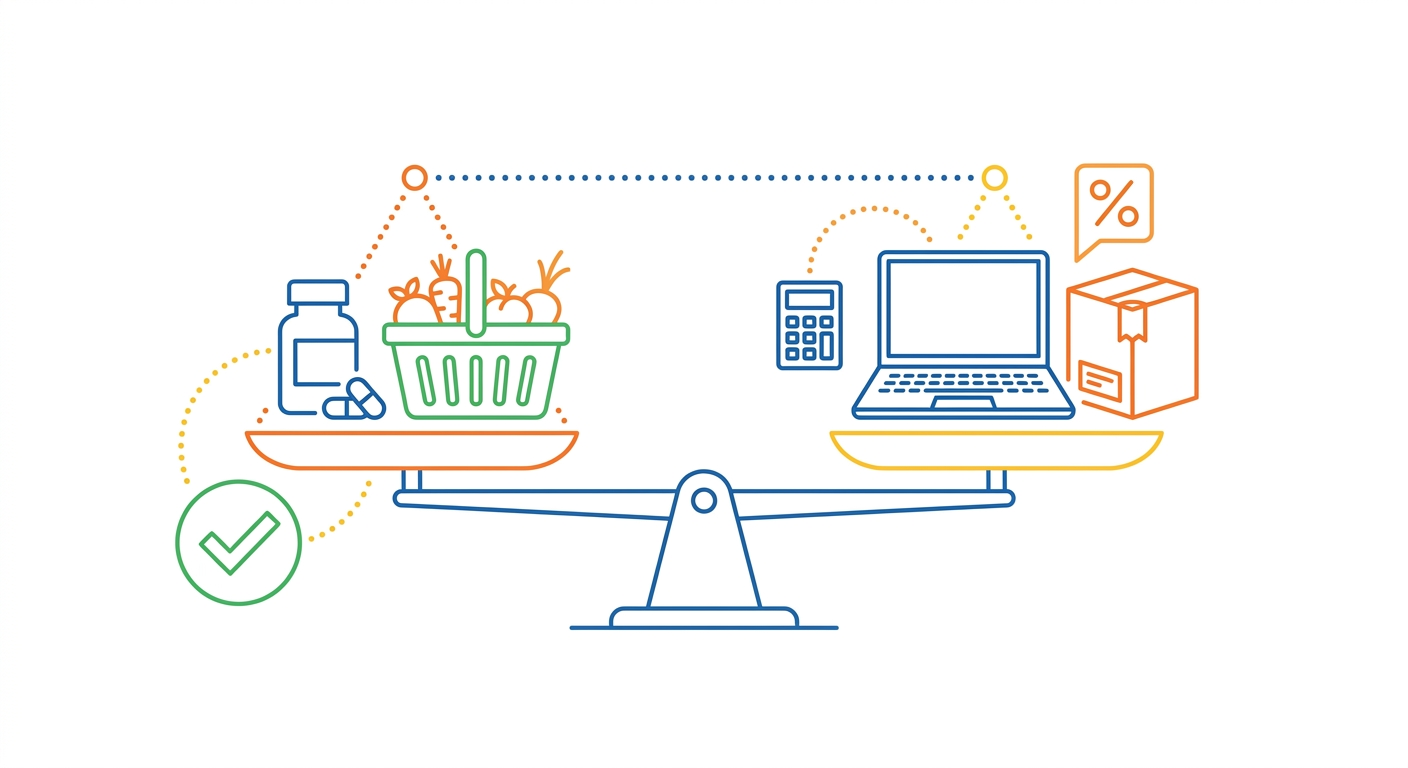
One of the most common causes of sales tax errors is product misclassification. Many businesses assume a product is either taxable everywhere or exempt everywhere. In reality, taxability often depends on the product type, customer type, jurisdiction, intended use, and local tax regulations.
A mistake in classification can result in under-collected tax, over-collected tax, audit penalties, customer disputes, and compliance risks. As businesses expand across multiple states or countries, understanding the difference between tax-exempt and taxable products becomes increasingly important.
This guide explains how product taxability works, common classification challenges, and practical steps businesses can take to stay compliant.
Understanding Taxable Products
Taxable products are goods or services that are subject to sales tax, VAT, GST, or other consumption taxes under a jurisdiction’s laws.
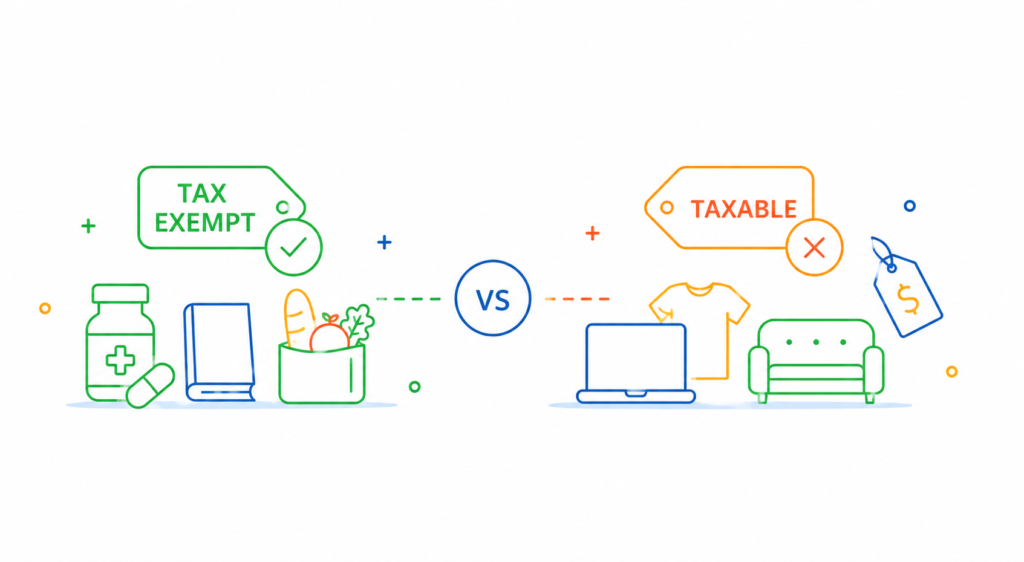
Examples of commonly taxable products include:
- Consumer electronics
- Furniture
- Clothing in many jurisdictions
- Automotive parts
- Household goods
- Software and digital products in some regions
When a taxable product is sold, the seller is generally responsible for collecting the appropriate tax and remitting it to the relevant tax authority.
While this sounds straightforward, the challenge begins when products fall into categories that receive special treatment.
Understanding Tax-Exempt Products
Tax-exempt products are goods or services that are excluded from taxation under specific laws or regulations.
Examples often include:
- Prescription medications
- Certain medical devices
- Basic groceries in some states
- Educational materials in certain jurisdictions
- Agricultural products
- Nonprofit purchases under qualifying circumstances
Tax exemption does not mean the transaction should be ignored. Businesses must often maintain documentation proving that an exemption legitimately applies.
Without proper records, tax authorities may treat the transaction as taxable during an audit.
Why Product Classification Matters
Tax authorities expect businesses to classify products correctly.
Incorrect classification can lead to:
Underpayment of Tax
If a taxable item is mistakenly treated as exempt, the business may become responsible for unpaid taxes, interest, and penalties.
Overcharging Customers
Charging tax on exempt products can create customer dissatisfaction and refund requests.
Audit Risk
Product classification errors are among the most common issues identified during tax audits.
Operational Inefficiencies
Employees spend more time correcting invoices, processing adjustments, and responding to customer inquiries.
Accurate classification reduces risk while improving customer trust and operational efficiency.
Why Taxability Varies by Jurisdiction
Many businesses assume a product’s tax status is universal.
It is not.
A product may be:
- Taxable in one state
- Exempt in another state
- Subject to reduced tax rates elsewhere
- Taxed differently internationally
For example, clothing is taxable in some U.S. states but exempt in others. Digital products may be taxable in certain jurisdictions while receiving different treatment elsewhere.
As businesses expand into additional regions, maintaining accurate product taxability becomes significantly more complex.
Common Product Classification Mistakes
Assuming Similar Products Share the Same Tax Treatment
Products that appear nearly identical may receive different tax treatment.
For example:
- Dietary supplements may be taxable
- Prescription medications may be exempt
Small distinctions can create major compliance differences.
Ignoring Customer Exemption Status
Some customers qualify for exemptions.
Examples include:
- Government entities
- Nonprofit organizations
- Resellers
Failing to verify exemption eligibility can create unnecessary tax collection or compliance issues.
Not Updating Product Classifications
Tax laws evolve frequently.
Products that were taxable previously may later qualify for exemptions or reduced rates.
Businesses should review classifications regularly.
Relying on Manual Processes
Manual tax classification often leads to inconsistency.
Different employees may classify the same product differently, increasing risk and reducing reporting accuracy.
Documentation Requirements for Exempt Products
Proper documentation is essential whenever an exemption is applied.
Common records include:
Exemption Certificates
Many jurisdictions require exemption certificates from qualifying customers.
Resale Certificates
Businesses purchasing products for resale often provide resale certificates to suppliers.
Purchase Documentation
Invoices and supporting records should clearly demonstrate why an exemption was applied.
Audit Trails
Businesses should maintain organized records showing tax decisions and supporting evidence.
Without documentation, an exemption may be disallowed during an audit.
How Expansion Increases Classification Challenges
As companies grow into additional states and countries, product classification becomes more difficult.
Challenges include:
Multiple Tax Systems
Businesses may encounter:
- Sales tax systems
- VAT systems
- GST systems
Each may classify products differently.
Regional Product Rules
Products that qualify for exemptions in one jurisdiction may not qualify elsewhere.
Increased Filing Requirements
Classification errors can impact multiple returns across multiple jurisdictions.
Greater Audit Exposure
The more jurisdictions involved, the greater the likelihood of audit scrutiny.
Expansion requires a scalable approach to classification management.
Best Practices for Accurate Product Classification
Create Standardized Product Categories
Develop a consistent product taxonomy across the organization.
Standardized classifications reduce confusion and improve reporting.
Maintain Current Tax Research
Review regulatory updates regularly to ensure classifications remain accurate.
Train Internal Teams
Employees involved in sales, finance, accounting, and compliance should understand basic taxability rules.
Conduct Periodic Reviews
Regular audits help identify classification errors before tax authorities do.
Use Automated Tax Technology
Modern tax automation tools help businesses:
- Assign tax categories
- Apply jurisdiction-specific rules
- Update taxability logic automatically
- Maintain audit-ready records
Automation significantly reduces manual errors and compliance risk.
How IST Helps Businesses Manage Product Taxability
Managing taxability across multiple jurisdictions can quickly become overwhelming.
IST helps businesses simplify the process by providing:
- Automated product classification support
- Accurate tax determination
- Multi-jurisdiction compliance management
- Centralized reporting
- Audit-ready documentation
By reducing manual effort and improving consistency, businesses can focus on growth instead of tax uncertainty.
Final Words
Understanding the difference between tax-exempt and taxable products is a fundamental part of sales tax compliance. While classification may seem straightforward, taxability often varies based on product type, customer status, intended use, and jurisdiction.
As businesses expand into new markets, classification challenges multiply. Misclassification can result in penalties, audits, lost revenue, and customer dissatisfaction.
The most successful organizations treat product classification as an ongoing compliance process rather than a one-time task. With proper controls, documentation, and automation, businesses can reduce risk and maintain accurate tax compliance across every jurisdiction in which they operate.
Not sure whether your products are taxable, exempt, or subject to special tax rules?
IST helps businesses classify products accurately, automate tax calculations, and maintain compliance across multiple jurisdictions.
Contact IST today to simplify product taxability management and reduce the risk of costly tax errors as your business grows.
Leave a Reply