

A $42 million industrial services deal closes. Six months later, the buyer’s first sales tax audit reveals the target company had nexus in eight states it never registered in. The exposure, back taxes, compounding interest, and full statutory penalties, comes to $1.4 million. The purchase agreement had no specific indemnification for sales tax. The buyer absorbs the liability.
This is not a rare outcome. State sales tax nexus exposure is the most common tax surprise in lower-middle-market deals. A discovered exposure of $500,000 to $2,000,000 in unfiled sales tax typically results in either a dollar-for-dollar purchase price reduction or a special escrow until the company completes voluntary disclosure agreements with the affected states.
“Sales tax M&A due diligence” is not a back-office checklist item. It is a deal-shaping analysis, one that determines whether the purchase price holds, whether the transaction structure changes, and in some cases, whether the deal closes at all. The side that quantifies the exposure first shapes the negotiation.
Sales tax due diligence is a critical component of M&A transactions because unresolved sales tax liability transfers to the buyer in both equity and asset acquisitions. Discovered exposure of $500,000 to $2,000,000 in unfiled sales tax is common in lower-middle-market deals and typically causes a dollar-for-dollar purchase price reduction or escrow holdback. State statutes of limitations do not begin tolling when returns were never filed, meaning uncollected liability can extend to the date nexus was first established. Voluntary disclosure agreements cap lookback periods at 3–4 years and waive penalties, making them the primary resolution tool for pre- and post-close sales tax exposure in M&A transactions.
Sales tax due diligence in mergers and acquisitions must include a nexus analysis covering all historical operating states, a product taxability review, a filing history reconciliation, an exemption certificate audit, and a state-by-state exposure quantification using actual penalty and interest rates. Discovered sales tax exposure of $500,000 to $2,000,000 typically results in a dollar-for-dollar purchase price reduction or escrow holdback until voluntary disclosure agreements are completed.
Why Sales Tax Exposure Hides So Well in M&A Targets
Most acquisition targets do not have obvious sales tax problems. They have invisible ones.
A SaaS company that has been growing for five years may have crossed economic nexus thresholds in 15 states and registered in 4. A regional distributor that opened two new warehouses three years ago created physical nexus in two additional states and never updated its registration. A manufacturer selling to exempt customers may have exemption certificate gaps that look clean in the system but collapse under audit scrutiny.
State statute of limitations don’t start tolling in situations where returns were never filed; therefore, a taxpayer could be liable for taxes owed from the date nexus was first established through the current date.
For a company that established nexus in Texas in 2019 and never registered, that’s six years of uncollected Texas sales tax, at rates up to 8.25%, with no statute of limitations protection whatsoever.
The buyer who discovers this post-close owns it. That is the core problem that sales tax due diligence is designed to prevent.
Deal Structure Determines Who Inherits the Liability
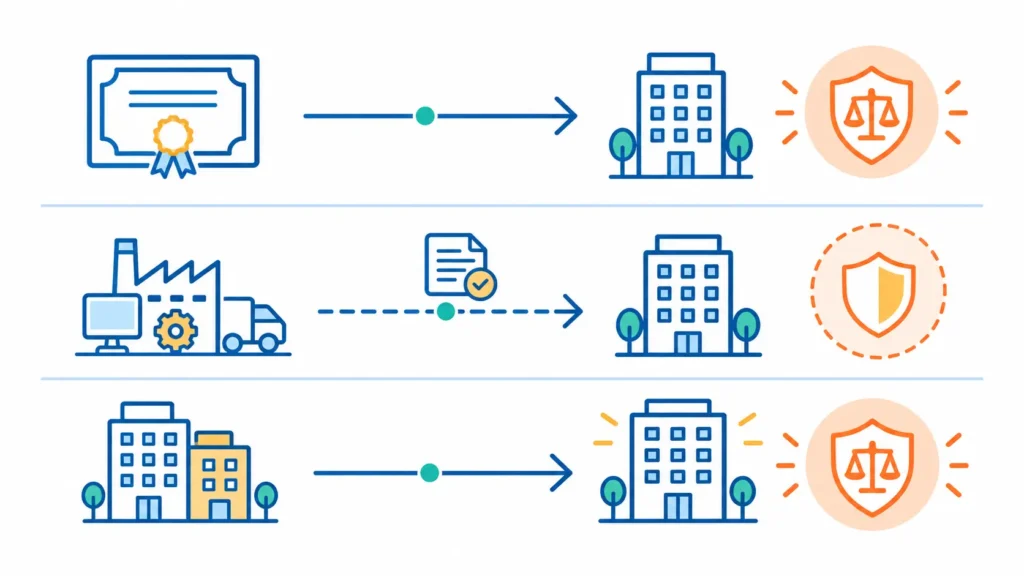
The most consequential variable in sales tax M&A risk is not the size of the exposure. It’s the deal structure.
Transaction Types & Sales Tax Liability Treatment
Stock/equity acquisition
All target liabilities transfer to buyer, known and unknown. Prior-period sales tax exposure becomes the buyer’s obligation.
Asset acquisition
Buyer may inherit seller’s sales tax liabilities as a successor under state law. Bulk sale notification procedures, when followed correctly, can limit this, but vary significantly by state.
Merger
Surviving entity assumes all liabilities of the merged entity, including any unresolved sales tax exposure.
Asset acquisition with carve-out
Specific indemnification provisions and escrow arrangements can isolate identified exposure, but only if the exposure was quantified during due diligence.
In an equity acquisition, the debts, known and unknown, of the target entity will remain with the business. There is no structural protection for unknown liabilities in a stock deal. The buyer inherits everything the seller didn’t know about.
Many states have statutes that impose successor liability on the purchaser of a business, or of substantially all of its assets, for the seller’s unpaid sales and use tax unless the purchaser complies with prescribed notice, withholding, or clearance procedures. Following bulk sale procedures in every applicable state is not optional, it is the mechanism by which asset buyers avoid inheriting the seller’s entire uncollected history.
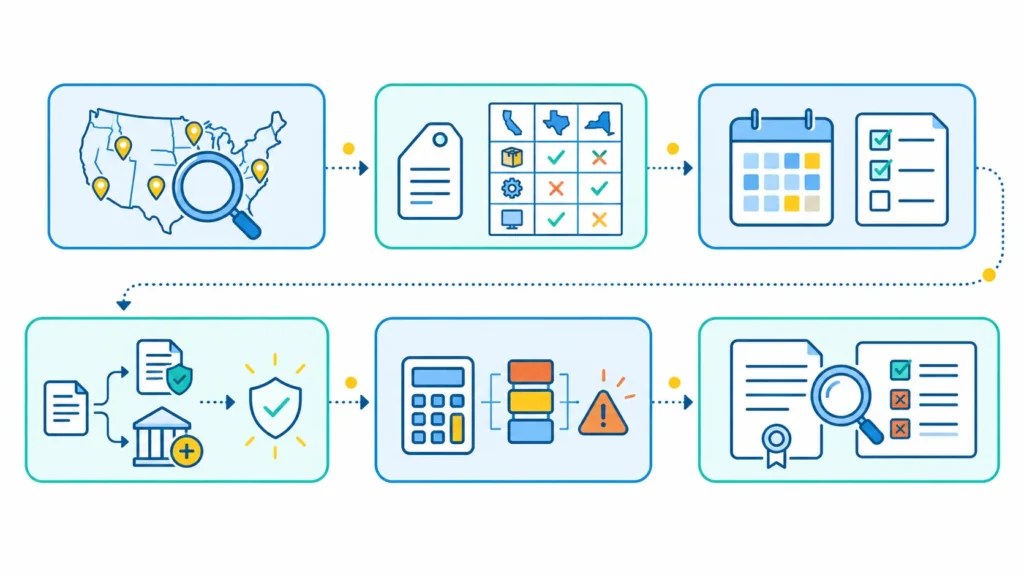
The Six-Step Sales Tax Due Diligence Framework
Sales tax exposure surfaces in almost every M&A process involving a multi-state seller, and the side that quantifies it first shapes the negotiation. Here is the framework that produces a defensible exposure number:
Step 1: Nexus analysis across all historical operating states
Identify every state where the target company has created nexus, physical presence through offices, warehouses, or remote employees; economic nexus through revenue or transaction thresholds; and nexus inherited from prior acquisitions. The nexus analysis covers the full historical period, not just the last three years.
Step 2: Taxability review for every product and service line
Nexus determines where the target should have been collecting. Taxability determines what it should have been collecting on. These are two different analyses. Overstating taxability inflates apparent exposure, while understating it leaves liability for the buyer’s team to find. Both directions carry risk.
Step 3: Registration and filing history reconciliation
Cross-reference the nexus map against the target’s actual registration list. Every state with nexus and no registration is an open exposure period. Every state with registration should be checked for filing completeness, accuracy, and consistency with revenue reported in the target’s financial statements.
Step 4: Exemption certificate audit
Pull a sample of the target’s tax-exempt transactions and verify that valid, current exemption certificates exist for each one. In a business with significant B2B revenue and reseller customers, a gap-riddled certificate file can swing the audit exposure by hundreds of thousands of dollars. This step is consistently underweighted in general due diligence and consistently overweighed in what auditors find post-close.
Step 5: Exposure quantification by state
For each unregistered state with nexus, calculate the base tax exposure using actual revenue data and applicable state and local rates. Apply the actual state penalty and interest structure, not an average, to produce a maximum exposure figure per state. Sum to a total maximum exposure range. This is the number that goes into the purchase agreement, the escrow calculation, and the VDA prioritization plan.
Step 6: Mitigation strategy determination
Once exposure is quantified, the buyer and seller must determine the resolution path. A voluntary disclosure agreement (VDA) can be a way for a company to self-report back taxes owed; in exchange states generally waive penalties and limit the look-back period, typically three or four years. Immaterial exposures may be resolved through direct registration and retroactive remittance. Material exposures typically require VDA, either initiated by the seller before close or by the buyer post-close with appropriate contractual protections.
Seller vs. Buyer: Whose VDA Is It?
This is where timing becomes a deal-structuring question.
If the seller initiates the VDA before close
The exposure is resolved, documented, and off the table. The buyer acquires a clean compliance history in the affected states. The seller incurs the cost of resolution, base tax and interest for the capped lookback period, with penalties waived, but retains more control over the deal terms.
If the buyer assumes responsibility post-close
The VDA must be initiated by the surviving entity, using the target’s historical transaction data. The lookback period and penalty structure are the same, but the buyer is now managing a remediation process they didn’t design, using data they may not have complete access to, in states they may not be familiar with.
Entering into a VDA with a state related to a sales and use tax issue can significantly reduce historical exposure by limiting lookback periods and penalties. A VDA can also be paired with escrow and indemnity protections to address any residual buyer exposure related to identified sales and use tax issues.
The practical recommendation: sellers who want to preserve deal value should initiate their own nexus analysis and any necessary VDA filings as early in the pre-sale process as possible. A seller who walks into a process with a clean compliance history commands better terms than one whose data room reveals five years of unregistered California nexus on a $50 million revenue base.
What Happens When Sales Tax Exposure Surfaces at Closing
When due diligence identifies material sales tax exposure and no pre-close VDA has been initiated, the deal rarely falls apart, but it always reprices.
The standard mechanisms are:
– “Dollar-for-dollar purchase price reduction” equal to the quantified maximum exposure
– “Escrow holdback” of the estimated exposure amount, released to the seller after VDA resolution is confirmed by state authorities
– “Specific tax indemnification” in the purchase agreement, requiring the seller to cover sales tax liabilities discovered post-close up to a defined cap and time period
– “Reps and warranties insurance” that covers discovered tax liabilities, increasingly common in transactions above $20 million
Successor liability can include unpaid back taxes, penalties, environmental violations, and interest if the seller failed to remit sales tax properly. If you’re not protected against successor liability when you acquire a business, you may face audits, financial penalties or lawsuits.
None of these mechanisms eliminates the exposure. They allocate who pays for it and when. The only way to eliminate the exposure is to resolve it, through VDA, direct registration, or a state clearance process, before the deal closes.
Final Words
Sales tax due diligence in M&A is not a compliance exercise. It is a valuation exercise. The exposure it identifies, measured in uncollected back taxes, compounding interest, and statutory penalties, translates directly into purchase price, escrow requirements, and post-close integration costs.
Every multi-state company going through a transaction has sales tax exposure. The question is whether the buyer, the seller, or an auditor finds it first and in what order. The first party to quantify it controls how it’s handled. The last party to discover it absorbs it on whoever’s terms were already set.
The framework exists. The states have the data. And AI-powered state audit systems in 2026 are specifically designed to find the exposure that years of manual review never caught. The best time to resolve sales tax liability in an M&A context is before the deal is priced. The second best time is before the first post-close audit notice arrives.
Resolve Sales Tax Exposure Before It Reshapes Your Deal
IST conducts sales tax due diligence for M&A transactions, nexus analysis, taxability review, filing history reconciliation, exemption certificate audits, and state-by-state exposure quantification, for both buyers and sellers at every stage of the transaction process.
IST also manages the VDA process in affected states, handling anonymous outreach, lookback negotiation, and coordinated filing across multiple jurisdictions, with the documentation package that supports deal closing, escrow release, and post-close audit defense.
Talk to an IST advisor today & Find out what your target company’s sales tax exposure actually is, before it becomes a purchase price reduction.
Frequently Asked Questions
What is sales tax due diligence in mergers and acquisitions?
Sales tax due diligence is the process of identifying, quantifying, and mitigating a target company’s sales tax exposure before an M&A transaction closes. It includes a nexus analysis across all historical operating states, a product taxability review, a filing history reconciliation, an exemption certificate audit, and a state-by-state calculation of back taxes, penalties, and interest. The output is a quantified exposure range that informs purchase price, escrow requirements, and indemnification terms.
What is successor liability for sales tax in an M&A transaction?
Successor liability is the legal principle that holds a buyer responsible for a seller’s unpaid sales tax obligations after an acquisition. In equity acquisitions, all prior-period liabilities transfer automatically. In asset acquisitions, many states impose successor liability unless the buyer follows prescribed bulk sale notification procedures. If bulk sale procedures are not followed and the seller had unpaid sales tax, the buyer can be held liable for the full amount, including penalties and interest, from the date nexus was first established.
How much sales tax exposure do M&A targets typically carry?
Discovered sales tax exposure of $500,000 to $2,000,000 is common in lower-middle-market deals involving multi-state sellers. Larger companies with more states, higher revenue, and longer histories of non-registration can carry significantly more. The exposure range depends on the number of unregistered nexus states, the applicable tax rates in each state, the years of uncollected liability, and the state-specific penalty and interest structure applied to the base tax owed.
Does a state’s statute of limitations protect a company from old sales tax liability?
Not if no returns were ever filed. State statutes of limitations typically begin running from the date a return is filed. If a company never filed a sales tax return in a state despite having nexus there, the statute of limitations has never started. The buyer or the company itself, can face liability going back to the date nexus was first established, potentially a decade or more, without any time limit protection.
What is a voluntary disclosure agreement and how does it work in M&A?
A voluntary disclosure agreement (VDA) is a negotiated settlement with a state tax authority that limits the lookback period for back taxes to 3–4 years and waives penalties in exchange for the company proactively registering, filing, and paying the tax owed for the covered period. In M&A transactions, VDAs are initiated either by the seller before close, to clean up the compliance record or by the buyer post-close to resolve identified exposure with contractual protections in place. VDA eligibility ends when the state makes contact first.
What are bulk sale procedures and why do they matter in asset acquisitions?
Bulk sale procedures are state-mandated notification and clearance steps designed to protect buyers from inheriting a seller’s tax debts in an asset acquisition. Most states require the buyer to notify the state of the pending sale, allow the state to audit the seller’s tax compliance, and either obtain a tax clearance certificate or withhold a portion of the purchase price until any identified liability is resolved. States vary significantly in their procedures and timelines. Buyers who skip bulk sale procedures in applicable states risk inheriting the seller’s full uncollected sales tax history.
Should the seller or the buyer initiate VDA in an M&A transaction?
Sellers who initiate their own nexus analysis and VDA filings before entering a sale process retain more control over deal terms and typically command better pricing. A seller who resolves $800,000 in exposure through a VDA before going to market pays base tax and interest for the capped lookback period and eliminates the leverage that exposure would give a buyer. Buyers who assume responsibility for post-close VDA must manage the remediation using the seller’s historical data, in states the buyer may be unfamiliar with, under contractual timelines.
What protections should buyers negotiate when sales tax exposure is identified in due diligence?
The standard protections are: a dollar-for-dollar purchase price reduction equal to the quantified maximum exposure; an escrow holdback of the estimated amount, released after state VDA completion is confirmed; a specific tax indemnification in the purchase agreement requiring the seller to cover discovered liabilities up to a defined cap and period; and, for transactions above $20 million, reps and warranties insurance covering identified tax liabilities. No single mechanism eliminates the underlying exposure, they allocate responsibility for it until resolution is completed.
Leave a Reply