
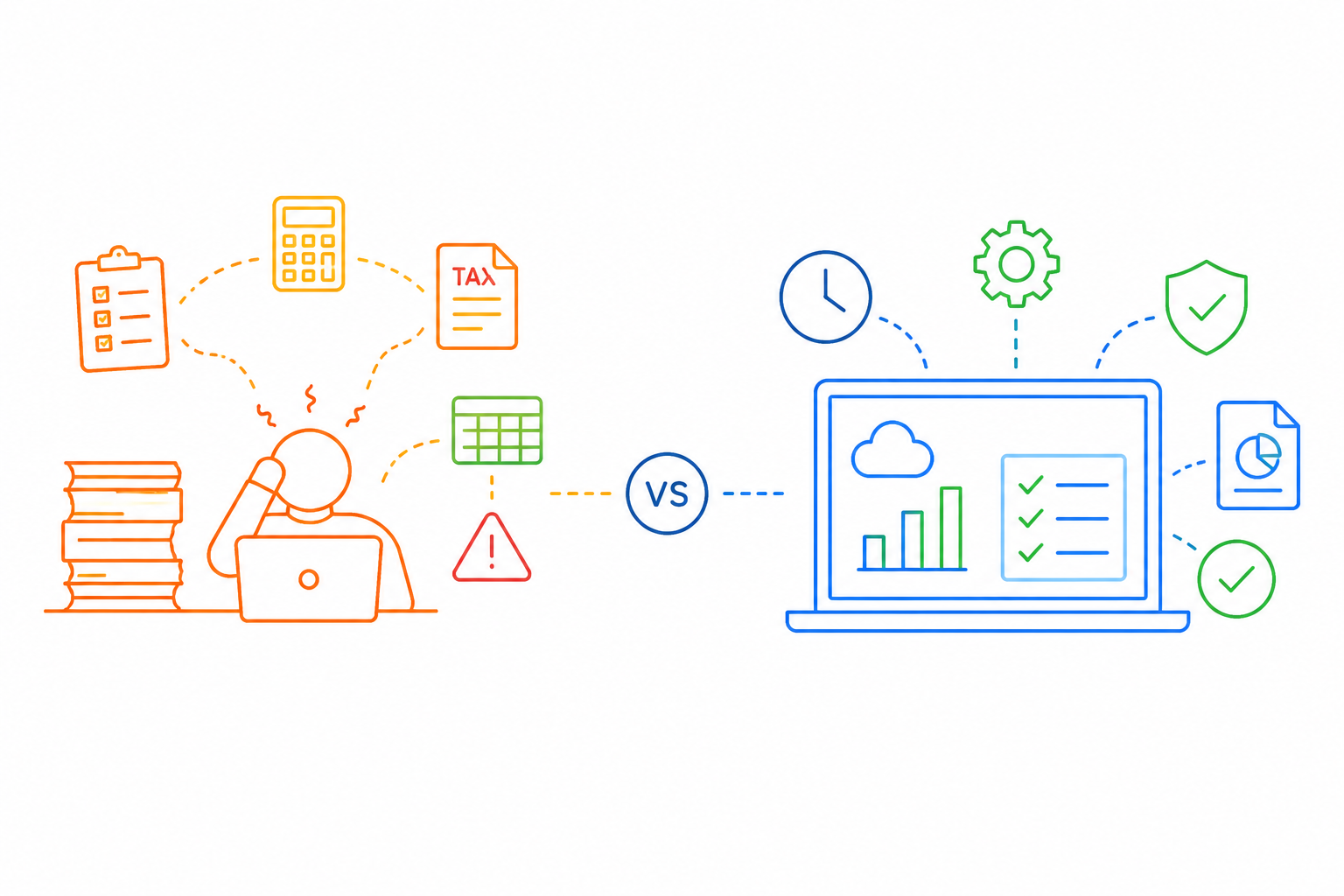
Every growing business eventually reaches a point where tax becomes more than a finance task.
At first, managing sales tax internally feels manageable. A few jurisdictions. A handful of filings. One accountant with heroic levels of spreadsheet confidence.
Then expansion happens.
More customers. More regions. More products. More exemptions. More reporting requirements. Suddenly, tax management starts consuming time that should be spent on growth.
This is where companies face an important decision:
Should tax management stay in house, or is it time to move to a platform like IST?
The answer depends on more than cost. It involves accuracy, scalability, operational efficiency, risk exposure, and long term business goals.
This guide compares both approaches and helps businesses determine which model creates the strongest foundation for growth.
What Is In House Tax Management?
In house tax management means your internal team handles sales tax activities using internal resources.
This typically includes:
- Tax calculation
- Tax registrations
- Filing and remittance
- Exemption management
- Documentation and reporting
- Compliance monitoring
Businesses often rely on:
- Internal accounting teams
- ERP systems
- Spreadsheets
- Accounting software
- Manual workflows
For smaller operations, this can work well.
Until complexity arrives.
Advantages of In House Tax Management
Direct Operational Control
Internal teams maintain full ownership of tax processes.
Benefits include:
- Immediate access to data
- Internal decision making
- Custom workflow design
Some organizations prefer maintaining complete visibility.
Familiarity with Business Operations
Internal teams often understand:
- Product structures
- Customer behavior
- Pricing models
- Internal approvals
This business context can improve coordination.
Lower Initial Technology Spend
At early stages, internal management may appear cheaper.
Small businesses often begin with existing tools rather than purchasing additional platforms.
The keyword here is appear.
Challenges of In House Tax Management
Growth changes the equation quickly.
Rising Labor Costs
Expansion increases tax workload.
Companies often add:
- Tax analysts
- Accountants
- External consultants
- Compliance managers
Payroll and overhead increase continuously.
Greater Human Error Risk
Manual processes create opportunities for mistakes.
Examples include:
- Incorrect rates
- Filing delays
- Misclassification
- Missing nexus thresholds
One small error can create significant liability.
Slower Response to Regulatory Changes
Tax rules evolve constantly.
Internal teams may struggle to monitor:
- Rate changes
- Registration requirements
- New digital tax laws
- Jurisdiction updates
Compliance becomes reactive.
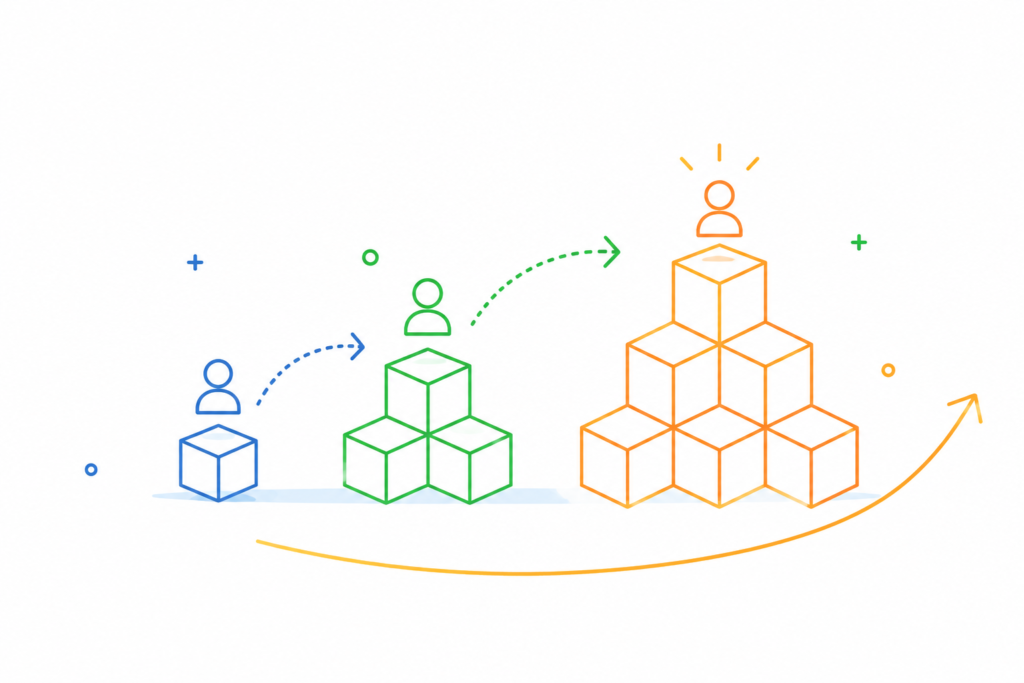
Limited Scalability
Internal systems often scale poorly.
What works in one state rarely works globally.
What Is a Tax Automation Platform Like IST?
A tax platform centralizes and automates tax management across jurisdictions.
Instead of relying heavily on manual effort, businesses use technology to:
- Calculate tax automatically
- Monitor compliance obligations
- Maintain records
- Track registrations
- Support reporting
Platforms transform tax from an administrative burden into an operational capability.
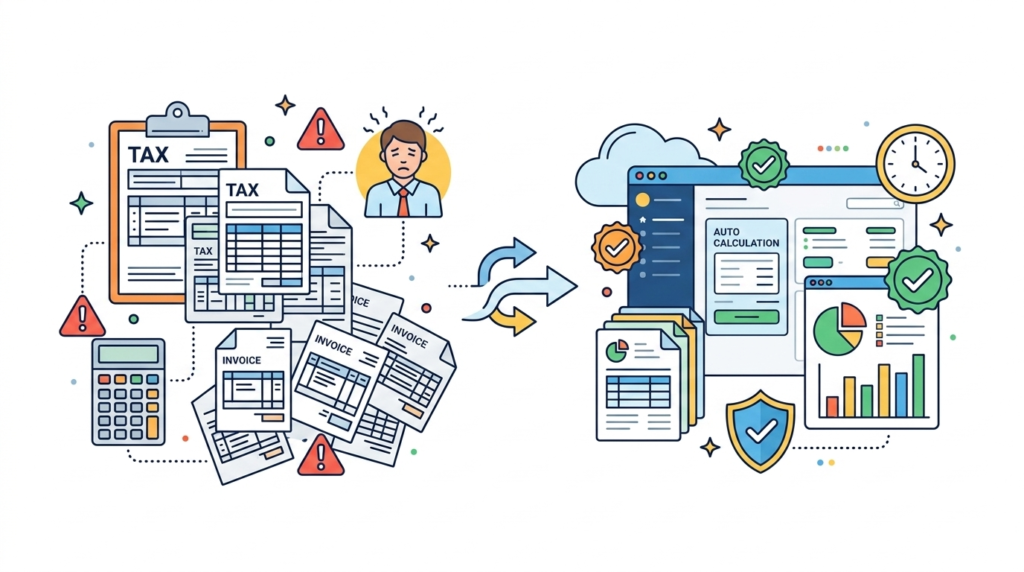
Comparing In House Tax Management vs IST
1. Cost
Costs include:
In House Approach
- Salaries
- Training
- Software licenses
- External advisors
- Compliance remediation
Hidden costs often grow over time.
Platform Approach
Platforms consolidate multiple functions.
Businesses reduce:
- Manual processing
- Administrative labor
- Correction costs
The result is often lower total cost as transaction volume grows.
Winner: Platform for long term efficiency
2. Accuracy
In House Approach
Accuracy depends heavily on people and process discipline.
Challenges include:
- Rate updates
- Data entry mistakes
- Interpretation differences
Businesses that automate tax determination often see improved consistency and fewer filing errors.
Platform Approach
Automation applies rules consistently.
Benefits include:
- Standardized calculations
- Real time updates
- Reduced manual intervention
Winner: Platform for consistency
3. Time Savings
In House Approach
Teams spend time on:
- Research
- Validation
- Reconciliation
- Filing preparation
Hours accumulate quickly.
Platform Approach
Automation reduces administrative effort.
Teams focus on:
- Planning
- Strategy
- Business growth
Winner: Platform for productivity
4. Scalability
In House Approach
Expansion creates operational bottlenecks.
New regions require:
- Additional training
- New workflows
- More headcount
Platform Approach
Modern platforms scale across:
- Jurisdictions
- Product lines
- Transaction volume
Growth becomes operationally manageable.
Winner: Platform for expansion
5. Risk Mitigation
In House Approach
Risk exposure increases with complexity.
Common issues:
- Late filings
- Incorrect tax collection
- Audit vulnerability
Platform Approach
Automated controls improve:
- Documentation
- Audit readiness
- Rate accuracy
Winner: Platform for compliance resilience
Where In House Still Makes Sense
Platforms are not automatically the right answer for every business.
In house management may still work for:
Small Local Operations
Businesses selling in limited jurisdictions often maintain manageable complexity.
Highly Specialized Tax Environments
Some industries require unique internal controls.
Temporary Early Stage Operations
Companies testing markets before scaling may delay platform investment.
The key question is not whether internal teams are capable.
It is whether internal processes remain sustainable.
Signs You Have Outgrown In House Tax Management
Watch for indicators like:
- Growing filing volume
- Frequent tax corrections
- Manual reconciliation work
- Multiple registrations
- Delayed reporting
- Increased audit requests
- Dependence on spreadsheets
If tax operations consume disproportionate time, your system may be limiting growth.
How IST Helps Businesses Scale
IST helps businesses move beyond reactive tax management. Companies looking to simplify multi-state and international compliance can also explore our guidance on global sales tax compliance strategies.
Our platform supports:
Automated Tax Calculation
Apply accurate tax logic across jurisdictions.
Centralized Compliance
Track obligations in one place.
Scalable Infrastructure
Support expansion without multiplying manual work.
Audit Ready Documentation
Maintain defensible records and reporting.
Reduced Operational Risk
Lower exposure to costly compliance mistakes.
The goal is not replacing your finance team.
The goal is letting your team focus on higher value work.
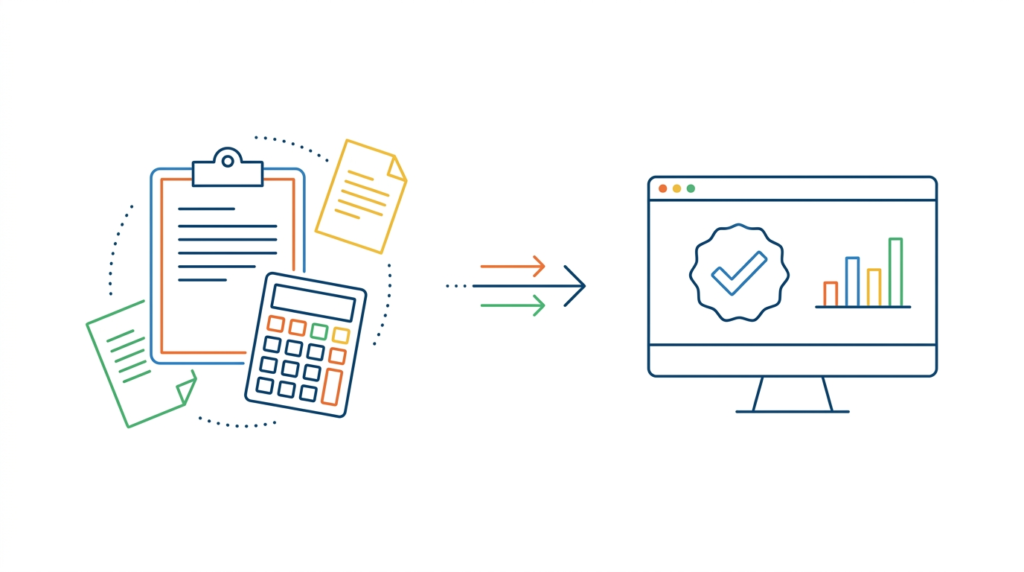
Building the Right Tax Strategy
The strongest businesses combine:
- Internal expertise
- Smart automation
- Clear governance
Technology supports people.
People drive decisions.
That combination scales.
As tax authorities continue modernizing compliance requirements, businesses need systems that can adapt quickly to regulatory changes and digital reporting standards. According to the OECD Tax Administration Digital Transformation Report, governments worldwide are increasingly investing in digital tax administration, automation, and data-driven compliance initiatives. Businesses that embrace automation today will be better positioned to meet tomorrow’s tax requirements.
Final Words
If your organization is evaluating growth into new regions, our article on cross-border sales tax compliance explains the challenges businesses face when managing tax obligations across multiple jurisdictions.
In house tax management offers control and familiarity, but growth changes what businesses require.
As operations expand, manual workflows become slower, more expensive, and harder to maintain. Increased transaction volume, new jurisdictions, and evolving regulations raise the cost of staying internal.
Platforms like IST help businesses improve accuracy, reduce operational burden, increase scalability, and strengthen compliance.
The decision is not about choosing technology over people.
It is about giving your people systems that allow them to perform at their best.
Growth should create momentum, not administrative drag.
Still managing tax with spreadsheets, disconnected systems, and growing manual effort?
IST helps businesses simplify tax operations, reduce compliance risk, and scale confidently across regions.
Contact IST today and discover how much time, cost, and complexity your business can eliminate with a smarter approach to tax management.
Leave a Reply