
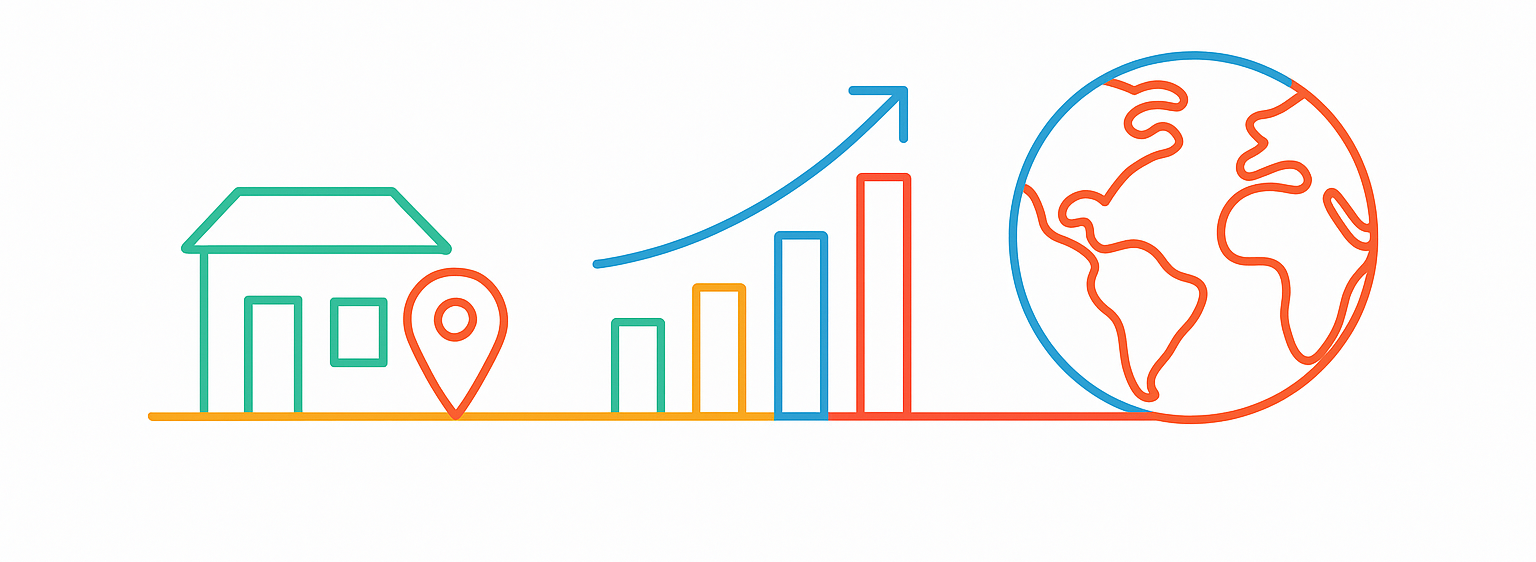
As businesses grow beyond their original markets, tax compliance becomes one of the most complex and high risk operational challenges they face. What begins as a simple local sales tax obligation can quickly evolve into a multi jurisdiction responsibility involving different rules, thresholds, filing schedules, and reporting standards. For companies expanding across states or entering global markets, scaling tax compliance is not optional. It is essential for sustainable growth.
This article explores how businesses move from local tax compliance to global readiness and how IST helps simplify that journey through automation, accuracy, and strategic control.
The Challenge of Scaling Tax Compliance
When a business operates in a single location, tax compliance is relatively straightforward. Rates are familiar, filing schedules are predictable, and rules change infrequently. Growth changes everything.
Expanding into new states introduces economic nexus rules, varying tax rates, product taxability differences, and new registration requirements. Selling internationally adds additional layers including value added tax, goods and services tax, customs duties, and cross border reporting requirements.
Many companies underestimate how quickly these obligations grow. Manual systems that worked locally often fail under the weight of expansion. Missed registrations, incorrect rates, and late filings become more common and more expensive.
Scaling successfully requires a tax compliance framework that grows at the same pace as the business.
Why Manual Processes Break Down at Scale
Manual tax compliance depends heavily on spreadsheets, internal tracking, and constant human oversight. While this may work in early stages, it creates significant risks as operations expand.
First, tax rules change frequently across jurisdictions. Tracking those changes manually becomes time consuming and error prone. Second, transaction volume increases rapidly with growth, making reconciliation and reporting more difficult. Third, manual systems lack visibility. Many businesses do not realize they have triggered new tax obligations until months later.
At scale, compliance needs consistency, real time accuracy, and centralized control. This is where automation becomes critical.

From Local Compliance to Multi State Readiness
For businesses expanding across the United States, the shift from local to national compliance is often the most difficult transition.
Economic nexus laws mean that physical presence is no longer required to create tax obligations. Sales volume alone can trigger registration and collection requirements in multiple states. Each state sets its own thresholds, filing frequencies, and tax rules.
IST helps businesses monitor these thresholds continuously. Instead of reacting after an obligation is triggered, companies gain visibility into where they are approaching nexus and can register proactively. This reduces exposure to penalties and back taxes while supporting confident expansion.
Preparing for Global Tax Complexity
Global growth introduces a new level of complexity. International tax compliance involves different tax models, reporting standards, and regulatory expectations. Value added tax systems require accurate rate application based on customer location, product type, and transaction structure.
Without a unified system, businesses often rely on fragmented solutions or local advisors in each market. This approach increases cost and reduces visibility.
IST provides a centralized compliance framework that supports international expansion. By standardizing data, automating calculations, and aligning reporting across regions, businesses gain clarity and control over their global tax obligations.
How IST Supports Scalable Tax Compliance
IST is built to support businesses at every stage of growth, from local operations to global enterprises.
First, IST automates tax calculation using real time rules and rates. This ensures accuracy regardless of where customers are located.
Second, IST centralizes compliance data across platforms, channels, and regions. Teams no longer need to reconcile disconnected systems.
Third, IST supports registration, reporting, and filing workflows. Instead of managing deadlines manually, businesses can rely on structured processes that reduce errors and missed filings. Finally, IST provides visibility. Decision makers can see where obligations exist, where risks are emerging, and how compliance aligns with growth strategy.
Reducing Risk While Enabling Growth
One of the biggest concerns for expanding businesses is compliance risk. Penalties, audits, and reputational damage can slow growth and distract leadership.
Scalable compliance is not just about meeting requirements. It is about creating confidence. When tax obligations are managed accurately and consistently, teams can focus on revenue, customer experience, and market expansion.
IST reduces risk by replacing reactive compliance with proactive control. Businesses are no longer guessing where they owe tax or whether they are filing correctly. They have data driven insight into their obligations at every stage.
Final Words
Growth changes everything about tax compliance. What works locally rarely works at scale. As businesses move from local markets to national and global operations, the cost of manual processes increases while the risk of errors grows.
Scaling tax compliance requires automation, visibility, and a system designed to grow alongside the business. IST provides the tools and structure needed to manage complex tax obligations with accuracy and confidence.
From local compliance to global readiness, IST helps businesses turn tax compliance from a barrier into a scalable advantage.
Ready to scale without turning tax compliance into a growth blocker?
IST helps businesses automate calculations, manage multi jurisdiction obligations, and stay compliant as they expand locally and globally. Connect with our team to see how IST can simplify your tax operations, reduce risk, and support confident growth at every stage.
Leave a Reply