
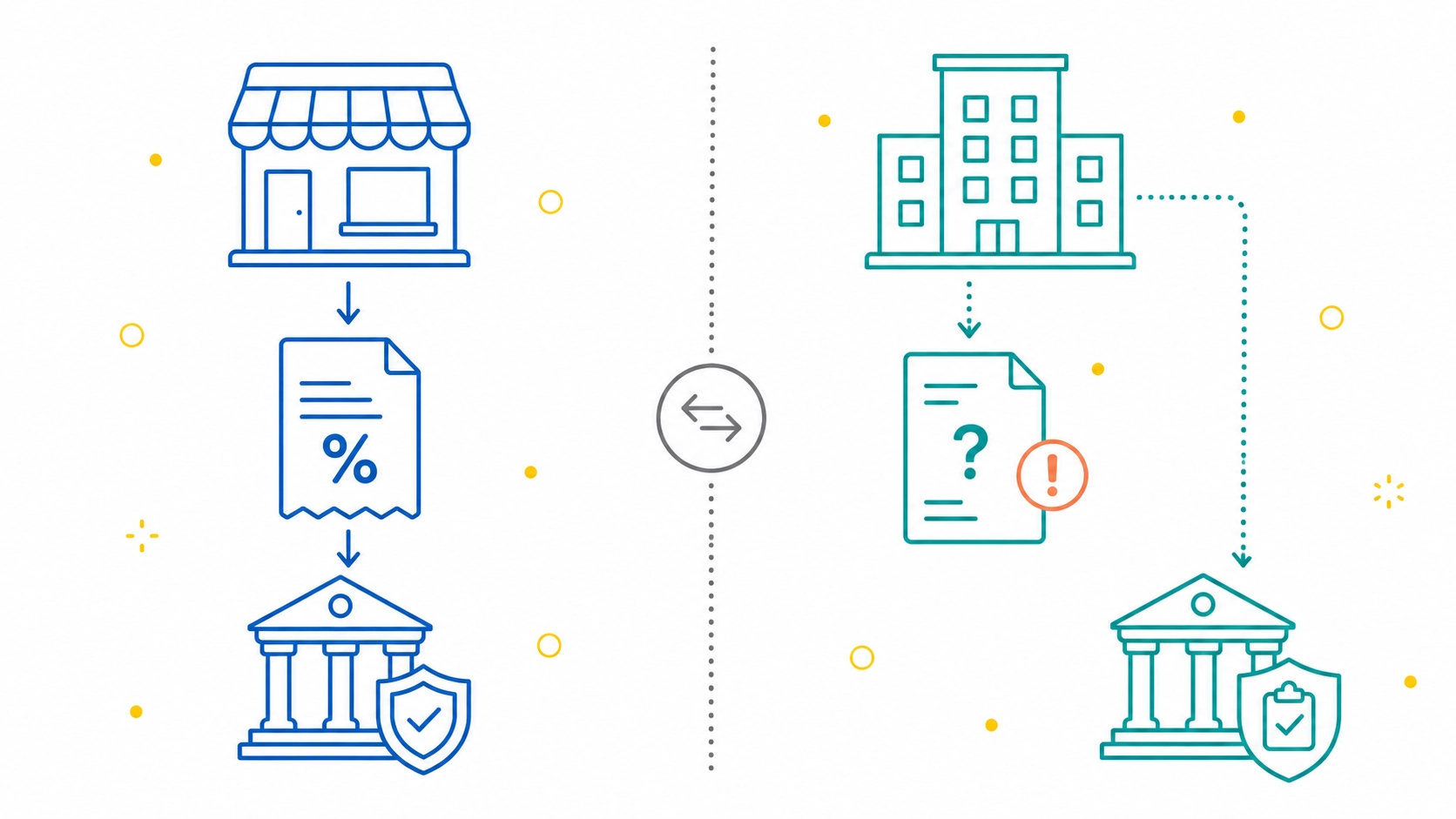
Sales tax is collected by the seller at the point of sale and remitted to the state. Use tax is owed by the buyer when a taxable purchase is made without sales tax being charged, typically from an out-of-state vendor. Enterprise companies owe use tax on taxable out-of-state purchases and must self-assess and remit it directly to their state’s revenue department.
A manufacturing company in Ohio buys $600,000 worth of equipment from a Texas vendor. The vendor doesn’t charge Ohio sales tax, it’s an out-of-state sale. The equipment arrives, gets installed, goes into production. Everyone moves on.
Six months later, an Ohio auditor asks whether the company self-assessed and remitted use tax on that purchase. The answer is no. The company didn’t know it was supposed to. The auditor does.
That scenario plays out in enterprise audits across every state, every year. Failing to properly assess consumer use tax ranks as one of the most common compliance mistakes made by companies. It’s not because enterprise companies are trying to avoid the obligation. It’s because use tax is structurally invisible in a way that sales tax is not and most accounts payable processes weren’t built to catch it.
Understanding “sales tax vs. use tax” is not an academic distinction. For enterprise companies buying across state lines, it determines which tax authority you owe, who is responsible for calculating it, and what happens when nobody does.
Sales tax and use tax are complementary obligations covering the same taxable transactions from different directions. Sales tax is collected by registered sellers at the point of sale. Use tax is self-assessed and remitted by the buyer when a taxable purchase was made without sales tax, typically from an out-of-state or unregistered vendor. Enterprise companies commonly owe use tax on out-of-state equipment purchases, software subscriptions used across multiple states, and purchases made under direct pay permits. Failing to assess use tax is one of the most common findings in enterprise sales and use tax audits across manufacturing, retail, and technology sectors.
What Sales Tax Is and Why It’s the Seller’s Problem
Sales tax is a transaction tax collected by the seller at the point of sale and remitted to the state where the sale occurs. The seller bears the collection responsibility. The buyer pays it through the purchase price. If the seller collects correctly, the buyer’s obligation is satisfied.
For enterprise buyers, this works cleanly when vendors are registered in the same state. A California company buying office supplies from a California vendor gets a California sales tax line on the invoice. Done.
The problem starts when the vendor is out-of-state and either isn’t registered in the buyer’s state, or doesn’t charge tax because it believes the transaction is exempt. In both cases, sales tax was never collected. And that doesn’t make the obligation disappear. It transfers it.
What Use Tax Is and Why It’s the Buyer’s Problem
Use tax is the mirror image of sales tax. It applies to taxable goods and services purchased for use in a state when sales tax was not collected by the seller. The buyer owes it. The buyer self-assesses it. The buyer remits it directly to their state’s revenue department, with no invoice, no vendor trigger, and no external prompt.
That self-assessment requirement is the structural problem. Sales tax appears on an invoice and gets recorded in accounts payable. Use tax appears nowhere. It requires someone in the organization to identify that a taxable purchase was made without sales tax, calculate the correct state (and sometimes local) use tax rate, and proactively file and remit it.
In a company processing thousands of vendor invoices per month, that is not a process most AP departments have. Which is exactly why manufacturing, retail, and hospitality industries often face greater risks of use tax noncompliance. regulations are more complex and can vary from state to state.
When Each Tax Applies: The Framework Enterprises Need
The determining factor is simple in principle, complex in execution:
Sales tax applies
when a vendor in the same state sells a taxable item and is registered to collect tax there. The vendor collects, remits, done.
Use tax applies
when a taxable item is purchased from an out-of-state vendor (or an unregistered in-state vendor) without sales tax being charged, and the item is used, stored, or consumed in the buyer’s state.
But enterprise purchasing creates edge cases that don’t fit neatly into that framework:
Direct pay permits
Some large enterprises obtain direct pay permits from state tax authorities. These permits allow the company to instruct vendors not to charge sales tax on any purchases, the company then self-assesses use tax directly on every taxable purchase. This gives enterprise buyers more control over exemption management, but it shifts the entire calculation burden to the buyer’s AP team. Purchasers who hold direct pay permits assume all responsibility to self-assess consumer use tax on purchases that should be taxed. Miss a category, and the liability is entirely yours.
Purchases used across multiple states
Enterprise companies that purchase equipment, software, or services used across multiple state locations may owe use tax in more than one state, apportioned based on where the item is used. A server purchased for a data center serving customers in six states may trigger use tax obligations in all six, calculated on an apportionment basis. No vendor invoice reflects this. The buyer has to calculate it independently.
Software and digital goods
The taxability of software purchased out-of-state varies dramatically. A SaaS subscription purchased from a California vendor and used by employees in Texas, New York, and Florida may trigger use tax in Texas and New York, but not Florida, which generally doesn’t tax SaaS. The correct answer requires a jurisdiction-by-jurisdiction taxability analysis on every software purchase. Most enterprise AP teams apply a single treatment to all software purchases, which is almost always wrong for at least some states.
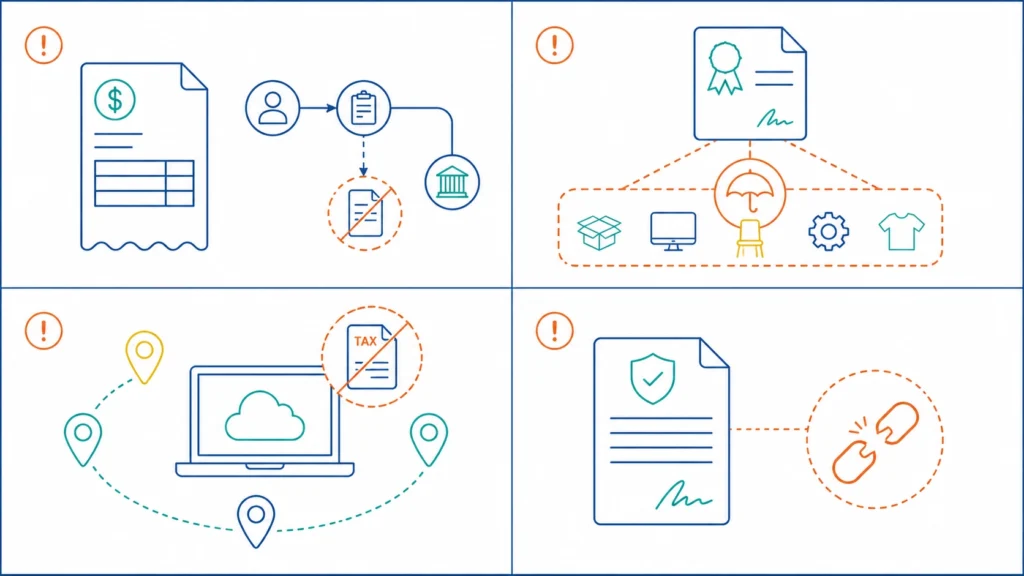
The Four Use Tax Failures That Show Up in Every Enterprise Audit
A 2021 study found that 72% of businesses surveyed had been audited in the previous five years and use tax is consistently one of the top findings. The pattern is predictable:
Failure 1: No use tax accrual process in AP
Accounts payable receives invoices, processes payment, records the expense. Unless the invoice has a sales tax line, use tax is never triggered. Most AP systems don’t flag out-of-state purchases without sales tax for use tax review. The purchases move through undetected.
Failure 2: Treating all out-of-state purchases as exempt
Some AP teams know about use tax but assume that if the vendor didn’t charge tax, the purchase must be exempt, perhaps because the company provided an exemption certificate. Exemption certificates cover specific categories. An exempt certificate for resale doesn’t exempt equipment purchases for internal use. Applying a single blanket assumption across all vendor invoices produces systematic errors.
Failure 3: Ignoring use tax on software and subscriptions
Enterprise software purchases, ERP licenses, SaaS tools, cloud storage, digital services, are frequently processed through procurement or IT without any use tax review. These purchases can be taxable in the states where the company has employees using the software. A $500,000 annual enterprise software contract used by employees in New York and Texas may generate significant use tax obligations in both states that have never been assessed or remitted.
Failure 4: Direct pay permit holders who don’t track what they owe
Direct pay permits were designed to simplify compliance, one filing, full control. In practice, enterprises that hold them often have no systematic process for tracking which purchases were taxable, in which states, at what rates. The permit shifts the entire obligation to the buyer. Without a tracking system, it creates a compliance gap that auditors find immediately.
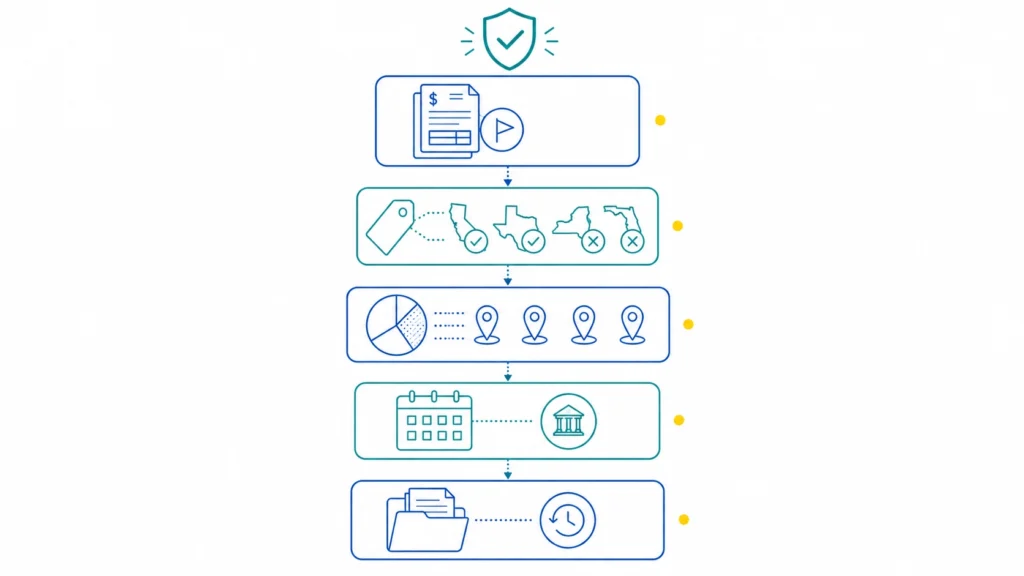
What a Proper Enterprise Use Tax Process Looks Like
Vendor invoice flagging
AP systems should flag invoices from out-of-state vendors where no sales tax was charged. This is the intake step, not every flagged invoice will generate use tax, but every use tax obligation starts with a purchase that was never taxed.
Taxability determination by state
Each flagged purchase should be evaluated against the taxability rules of the state where it will be used. This requires a product/service classification mapped to each state’s rules, not a blanket assumption.
Apportionment calculation for multi-state use
Purchases used across multiple states require apportionment. The calculation method varies by state but generally requires identifying the proportion of use in each state and applying the corresponding use tax rate.
Use tax accrual and remittance
Most states allow enterprises to file use tax on their sales tax return, on a separate use tax return, or as part of a consumer use tax filing. The schedule depends on the state and the company’s registration status. This is not a one-time filing, it’s a periodic obligation that needs to be built into the compliance calendar.
Documentation and audit trail
Use tax is one of the first things auditors look for, precisely because it’s self-assessed and easy to miss. Every use tax accrual should have documentation: the original vendor invoice, the taxability determination, the apportionment calculation if applicable, and the remittance record.
Final Words
Sales tax and use tax are two sides of the same obligation. Sales tax is visible because it appears on the invoice. Use tax is invisible because nothing prompts it except the buyer’s own compliance process and most enterprise AP workflows weren’t designed with that prompt built in.
Manufacturing companies face the highest audit rates at 18%, and use tax findings are a primary driver. But the exposure exists across every industry that makes out-of-state purchases, holds a direct pay permit, buys software used across multiple states, or processes high vendor invoice volumes without a systematic use tax review step.
The fix is not complicated. But it requires acknowledging that use tax is a parallel compliance obligation, not a sales tax variant that takes care of itself. Every enterprise that has never conducted a formal use tax review has exposure it doesn’t know about yet. The question is whether an internal process or an auditor finds it first.
Find Out What Your Enterprise Actually Owes in Use Tax
IST conducts use tax reviews for enterprise companies, identifying which vendor purchases should have generated use tax accruals, calculating the liability by state, and determining whether voluntary disclosure is the right path for prior-period exposure.
The starting point is understanding what your AP process currently catches and what it doesn’t. Most enterprises are surprised by the answer.
Talk to an IST advisor today, Find out what your enterprise owes in use tax, before an auditor calculates it for you.
Frequently Asked Questions
What is the difference between sales tax and use tax?
Sales tax is charged by a registered seller at the point of sale and collected from the buyer on the seller’s behalf. Use tax is owed by the buyer when a taxable purchase is made without sales tax being collected, typically because the seller was out-of-state or unregistered. Both taxes apply to the same categories of taxable goods and services; the difference is who owes the tax and who is responsible for remitting it.
When does an enterprise company owe use tax instead of sales tax?
A company owes use tax when it purchases a taxable item from a vendor that does not collect the applicable state sales tax, most commonly when buying from out-of-state vendors, vendors without nexus in the buyer’s state, or vendors from whom the company holds a direct pay permit. The buyer must self-assess the correct state and local use tax rate and remit it directly to the state revenue department.
What is a direct pay permit and how does it affect use tax obligations?
A direct pay permit is a state-issued authorization that allows a business to purchase goods without paying sales tax to any vendor, and instead self-assess and remit use tax directly to the state on all taxable purchases. It gives the buyer complete control over exemption and taxability determinations but assumes full responsibility for calculating and remitting use tax on every applicable purchase. Enterprises that hold direct pay permits without a systematic use tax tracking process face significant audit exposure.
How does use tax apply to software and SaaS purchases?
Use tax on software and SaaS depends on where the software is used and the taxability rules in those states. An enterprise SaaS subscription used by employees in New York and Texas may generate use tax obligations in both states, New York and Texas broadly tax SaaS, while the same subscription used by employees in California generally does not generate use tax, as California does not impose sales tax on most SaaS. Each state where the software is used requires a separate taxability determination.
How is use tax calculated when a purchase is used across multiple states?
When a taxable purchase is used in multiple states, use tax is typically apportioned based on the proportion of use in each state. Each state where the item is used applies its own use tax rate to the apportioned amount. The apportionment methodology varies by state and by asset type. Some states use a time-based apportionment; others use location of employees or other allocation factors. Enterprise companies with distributed operations must track multi-state use for capital equipment, software, and services to calculate apportioned use tax correctly.
What do auditors look for when auditing enterprise use tax compliance?
Auditors reviewing use tax compliance typically request a sample of vendor invoices, particularly from out-of-state vendors and verify whether use tax was assessed on taxable purchases. They look for: out-of-state invoices with no sales tax line and no corresponding use tax accrual; purchases of equipment, software, or services that are taxable in the state but were never subjected to use tax; direct pay permit holders without systematic use tax tracking; and software or SaaS subscriptions that were processed without any tax analysis.
Can an enterprise use a blanket exemption certificate to avoid use tax on all purchases?
No. Exemption certificates apply to specific categories of purchases, resale, manufacturing, nonprofit use, agricultural use and are state-specific. A resale certificate does not exempt equipment purchased for internal use. A manufacturing exemption does not exempt administrative purchases. Applying a blanket exemption assumption across all vendor invoices produces systematic errors that auditors find when they examine the specific nature of the purchases against the stated exemption category.
What should an enterprise do if it discovers years of unassessed use tax?
The first step is estimating the total exposure by reviewing vendor invoices for out-of-state purchases where no use tax was accrued. The second step is evaluating voluntary disclosure in each state where material use tax liability exists, most states offer VDA programs that limit the lookback period to three to four years and waive penalties. A company that waits for an audit to surface use tax exposure faces unlimited lookback in states where no returns were filed, plus full statutory penalties on the underpaid amount.
Leave a Reply