

Here is what a state audit looks like from the state’s side: an auditor is assigned to your company, given access to your financial records, and allowed to choose which years to examine. They pick their own sampling methodology. They apply their own interpretation of taxability to your products. And when they calculate what you owe, they add full statutory penalties on top of every year they choose to review, with no cap on how far back they can go if you never filed.
That last part is the one most CFOs don’t know. If a company has nexus in a state but has never registered or filed, many states face no statute of limitations. They can go back eight, ten, or twelve years. At scale, that exposure can reach seven figures before penalties are even calculated.
A “sales tax voluntary disclosure agreement, VDA” changes the terms of that equation entirely. It’s not a loophole. It doesn’t erase liability. But it gives the business, not the state, control over the process and that distinction is worth a significant amount of money.
A sales tax voluntary disclosure agreement (VDA) is a formal contract between a business and a state tax authority that allows the business to proactively disclose past unpaid sales tax obligations. In exchange, the state limits the lookback period, typically three to four years, and waives all penalties. VDAs are only available before a state initiates contact or audit proceedings.
A sales tax voluntary disclosure agreement (VDA) allows businesses with unregistered sales tax nexus to come forward proactively, pay past-due tax for a limited lookback period, and have all penalties waived. Most states cap the VDA lookback at three to four years, compared to an unlimited lookback during a state-initiated audit when no returns have ever been filed. Businesses may initiate VDAs anonymously through a third-party representative in most states. VDA eligibility is lost once a state makes contact. Enterprise companies commonly use VDAs after rapid growth, product expansion into new states, or post-acquisition tax liability discovery during M&A due diligence.
What a Sales Tax VDA Actually Is
A voluntary disclosure agreement is a formal contract between a business and a state tax authority. The business comes forward proactively to acknowledge past sales tax obligations, agrees to register, file back returns, and pay the tax owed for a negotiated period. In exchange, the state limits how far back it can look and typically waives all penalties.
Three things make a VDA fundamentally different from an audit:
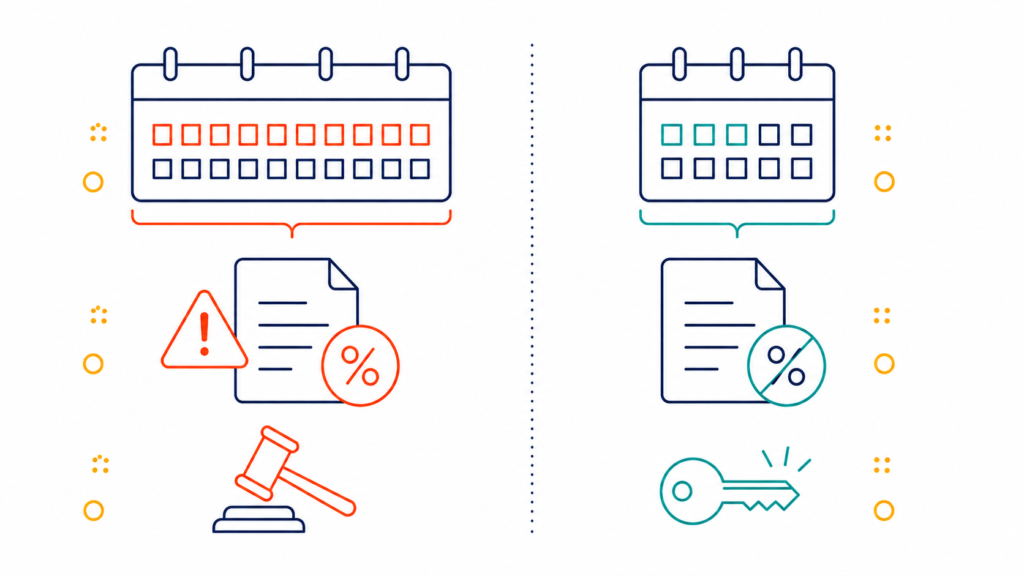
1.Lookback limitation: Most states cap the VDA lookback at three to four years. Texas limits it to four years. Florida generally limits it to three. Washington limits it to the prior four years plus the current year. New York can go up to six years, longer than most states, but still capped, and still far shorter than the unlimited lookback an audit carries when no returns have ever been filed.
2.Penalty waiver: In the large majority of states, all penalties are waived under a VDA. The business pays the tax owed and the accrued interest but not the 10% to 25% penalty that would be added in an audit.
3.Anonymity during negotiation: Most states allow a business to initiate a VDA anonymously through a third-party representative. The company’s identity is not disclosed until the agreement terms are finalized and accepted. This means the business can evaluate its exposure and negotiate the lookback period without triggering a registration or enforcement action.
But the window closes the moment a state makes contact first. Receiving a nexus questionnaire, an audit notice, or even an informal inquiry from a state tax authority disqualifies the business from VDA treatment in most jurisdictions. At that point, the audit process begins on the state’s terms.
Why Enterprise Companies Have More VDA Exposure Than They Realize
Enterprise businesses don’t discover VDA needs the way small businesses do. A company with $50 million in annual revenue across 25 states doesn’t suddenly realize it missed a registration. The exposure builds differently, through growth, acquisition, or product line expansion that outpaces compliance infrastructure.
Consider a software company that grew from $10 million to $80 million in revenue over four years. At $10 million, its economic nexus footprint covered eight states. At $80 million, it had crossed thresholds in 22. If registration kept pace with years one and two but fell behind in years three and four, the company now has unregistered nexus and compounding uncollected tax, in 14 states simultaneously.
That’s not negligence. That’s growth moving faster than compliance. And it’s the most common enterprise VDA scenario IST encounters.
Acquisitions create a different version of the same problem. When a company acquires another business, it typically inherits that business’s tax history, including any unregistered nexus, unfiled returns, and uncollected liability. A pre-acquisition VDA is one of the most effective tools available in M&A due diligence: it resolves the target’s historical exposure at a fraction of audit cost, with a capped lookback and waived penalties, before the deal closes. Buyers who skip this step discover the liability post-close, when the options are far more expensive.
How the VDA Process Works for Enterprise Companies
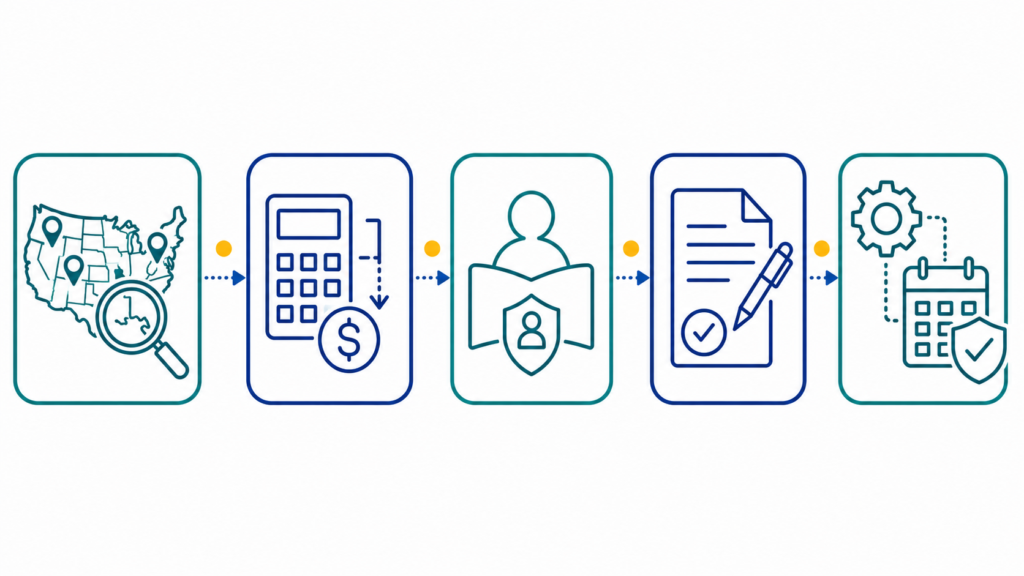
Most enterprise VDAs involve multiple states simultaneously and the process for each runs in parallel. Here is how it typically works:
Step 1: Nexus analysis. Before any disclosure, identify every state where the business has created nexus, physical presence, economic nexus threshold crossings, and any nexus created by affiliates, acquired entities, or remote employees. This analysis determines the scope of the VDA filing.
Step 2: Exposure calculation. For each state with unregistered nexus, calculate the estimated tax liability for the applicable lookback period. This gives the business a clear picture of the total financial exposure before any agreement is signed.
Step 3: Anonymous outreach. A third-party representative, typically a tax advisor, contacts each state anonymously to initiate VDA discussions. Lookback period, penalty treatment, and filing timeline are negotiated before the company’s identity is revealed.
Step 4: Agreement execution. Once terms are finalized, the business executes the agreement, registers in the state, files back returns for the agreed lookback period, and remits the tax and interest owed.
Step 5: Ongoing compliance. The VDA covers historical exposure. Going forward, the business must maintain compliance in every registered state, accurate calculation, timely filing, and proper exemption documentation.
For a company with 15 states of unregistered nexus, this process runs across all 15 simultaneously. Coordination is the primary operational challenge. Most enterprise companies manage it through an external tax advisor rather than internal staff, because the volume of state-specific negotiation and document preparation exceeds what most tax teams can handle on top of existing compliance obligations.
What a VDA Actually Saves in Practice
The financial case for a VDA over waiting is straightforward. Consider a distribution company that discovers it has unregistered nexus in eight states, with an estimated $400,000 in total uncollected sales tax going back six years.
Under a state-initiated audit, no VDA:
– Unlimited lookback: full six years of liability, potentially more
– Full statutory penalties (typically 10%–25%): $40,000–$100,000 in penalties alone
– Interest on the full unpaid amount from the original due date
– Staff time and professional fees to respond to auditors across eight separate state investigations
Under a VDA:
– Lookback capped at three to four years in most of the eight states
– Penalties waived entirely
– Interest paid only on the capped period
– Process completed on the company’s timeline, not the state’s
The total payment is still real. But the savings, in penalty elimination, reduced lookback, and avoided audit costs, routinely represent 40% to 60% of what the same liability would cost under an audit. And the company controls the process from the start, which cannot be said of any audit.
The One Condition That Changes Everything
VDAs are available only to businesses that come forward before the state makes contact. That is the hard line and it’s not negotiable.
Once a state sends a nexus questionnaire, issues an audit notice, or even reaches out informally, the voluntary disclosure window closes. The business is now in the audit process, on the state’s terms, without the lookback cap or penalty waiver.
This is why timing matters more than any other variable in the VDA decision. An enterprise company that suspects it has unregistered nexus exposure, in any state, should evaluate a VDA before doing anything else. Before filing new registrations. Before responding to inquiries. And absolutely before assuming the exposure will resolve itself.
The cost of acting early is a managed, predictable remediation. The cost of acting late is an audit.
Final Words
Sales tax voluntary disclosure is not a program for businesses in crisis. It’s a program for businesses that have grown faster than their compliance infrastructure, acquired companies with undisclosed tax history, or expanded into new states without keeping pace on registration and who want to fix that on their own terms before a state decides to fix it for them.
For enterprise companies with multi-state exposure, the VDA process is almost always the right path. The lookback is limited. Penalties are waived. The business controls the timeline and the negotiation. And when it’s done, the exposure is resolved with documentation that survives both future audits and M&A due diligence.
The alternative is waiting, which is not a strategy. It’s just a longer accumulation of the same liability, with more interest attached.
Resolve Your Past Exposure Before a State Does It For You
IST manages VDA filings across all U.S. states for enterprise companies with multi-state sales tax exposure. The process starts with a nexus analysis to determine where obligations exist, followed by anonymous VDA outreach, lookback negotiation, and coordinated filing across every affected jurisdiction.
If your company has grown into states where it hasn’t registered, acquired a business with undisclosed tax history, or simply isn’t certain its compliance footprint matches its actual nexus, this is the conversation to have now.
Talk to an IST advisor today & Find out what a VDA would cost and what waiting would cost more.
Frequently Asked Questions
What is a sales tax voluntary disclosure agreement (VDA)?
A VDA is a formal agreement between a business and a state tax authority. The business discloses past sales tax obligations it failed to register and remit, agrees to file back returns and pay the tax owed, and the state caps the lookback period and waives penalties. It is only available when the business comes forward before the state initiates contact.
How does a VDA limit a company’s sales tax liability?
A VDA limits liability in two ways. First, it caps the lookback period, the number of years for which back taxes must be paid, to typically three or four years. Without a VDA, states facing non-filers have no statute of limitations and can audit back eight to twelve years or more. Second, penalties, typically 10% to 25% of unpaid tax, are waived entirely under most state VDA programs.
Can a company file a VDA anonymously?
Yes, in most states. Businesses can initiate a VDA through a third-party tax representative without disclosing the company’s identity during the negotiation phase. The company’s identity is revealed only after the agreement terms are finalized and accepted. This allows the business to evaluate its exposure and negotiate lookback terms before making any formal commitment.
What disqualifies a company from a VDA?
A business is disqualified from a VDA if the state has already made contact, including sending a nexus questionnaire, issuing an audit notice, or reaching out informally about unfiled returns. In most states, even receiving a nexus questionnaire ends VDA eligibility. Prior registration with the state also disqualifies a business from VDA treatment for the period it was registered.
How does a VDA work for companies with nexus in multiple states?
Enterprise companies typically file VDAs across multiple states simultaneously. A third-party representative contacts each state anonymously, negotiates lookback and penalty terms, and manages the filing coordination. Each state runs on its own timeline and has its own program terms. Sequencing is important, states should not be contacted in an order that reveals the company’s identity before agreements are in place.
Is a VDA the same as a sales tax amnesty program?
No. A VDA is a negotiated agreement between the business and the state, available on an ongoing basis in most states. A sales tax amnesty program is a time-limited window announced by a state, typically lasting weeks or months, during which businesses can come forward with reduced or eliminated penalties and often reduced interest. Amnesty programs are less common and expire; VDAs are the standard ongoing path for resolving past exposure.
Should a business pursue a VDA before or after an acquisition?
Before. A pre-acquisition VDA on the target company’s historical exposure resolves undisclosed liability at capped lookback and waived penalties, before the buyer inherits it. Post-close, the buyer assumes the full liability including any audit risk on uncapped prior periods. Sellers benefit from a pre-closing VDA as well: it removes a leverage point that acquirers routinely use to reduce the purchase price or demand escrow holdbacks.
How long does the VDA process take?
The timeline varies by state and the complexity of the company’s filing history. Simple VDAs in cooperative states can be completed in 60 to 90 days. Multi-state VDAs with high transaction volumes, complex product taxability, or acquired entities typically take four to six months to negotiate and complete all filings. Preparation, building the back-period returns, is usually the most time-intensive phase.
Leave a Reply