
New Laws, Trends, and What Businesses Should Be Ready For
Sales tax and VAT systems around the world are evolving faster than most businesses expect. Governments are modernizing tax laws to keep pace with digital commerce, remote selling, and cross border trade. What worked five years ago is often no longer compliant today.
For businesses operating across multiple jurisdictions, understanding how tax rules are changing is critical. This article explores the most important sales tax and VAT trends shaping the future and what companies should prepare for now.
The Expansion of Economic Nexus Rules
One of the most significant changes in sales tax compliance over the past decade is the shift from physical presence to economic nexus.
Why economic nexus keeps expanding
Economic nexus laws allow tax authorities to require registration and tax collection based on sales volume or transaction count rather than physical presence. In the United States, nearly every state has adopted economic nexus thresholds, and enforcement continues to tighten.
Thresholds differ by jurisdiction and are subject to change. Businesses that grow quickly or sell through multiple channels often cross these thresholds without realizing it.
The trend is clear. More jurisdictions are asserting taxing rights over remote sellers, and compliance expectations are rising.
Digital Services Are Under Increased Tax Scrutiny
Digital services were once lightly regulated in many tax systems. That era is over.
How digital taxation is evolving
Many countries now tax SaaS, streaming platforms, digital subscriptions, online education, and downloadable content. These rules apply not only to local businesses but also to foreign sellers with no physical presence.
VAT and GST systems commonly tax digital services based on customer location. This requires sellers to collect location evidence, apply the correct rate, and often register locally.
Even in sales tax jurisdictions, states continue to expand the list of taxable digital products. Businesses that assume digital equals non taxable face growing risk.
Cross Border Ecommerce Is Driving New Compliance Models
Global ecommerce growth has forced tax authorities to rethink how taxes are collected from foreign sellers.
Marketplace facilitator laws
Many countries and states now place tax collection responsibility on online marketplaces rather than individual sellers. While this simplifies compliance for some businesses, it creates complexity for others who sell both directly and through platforms.
Understanding who is responsible for tax collection in each transaction is essential to avoid double taxation or under collection.
Import and low value shipment changes
Several regions have eliminated low value import exemptions. This means VAT or sales tax applies even to small shipments that were previously tax free.
These changes increase compliance obligations for ecommerce businesses selling internationally.
Increased Data Sharing and Digital Enforcement
Tax enforcement is becoming more data driven and automated.
What this means for businesses
Tax authorities are investing in technology to cross check filings, payment data, marketplace reports, and customs information. Errors that once went unnoticed are now flagged quickly.
Real time or near real time reporting requirements are expanding in many VAT jurisdictions. This reduces flexibility and increases penalties for late or inaccurate filings.
Businesses relying on manual processes or fragmented systems are especially vulnerable in this environment.
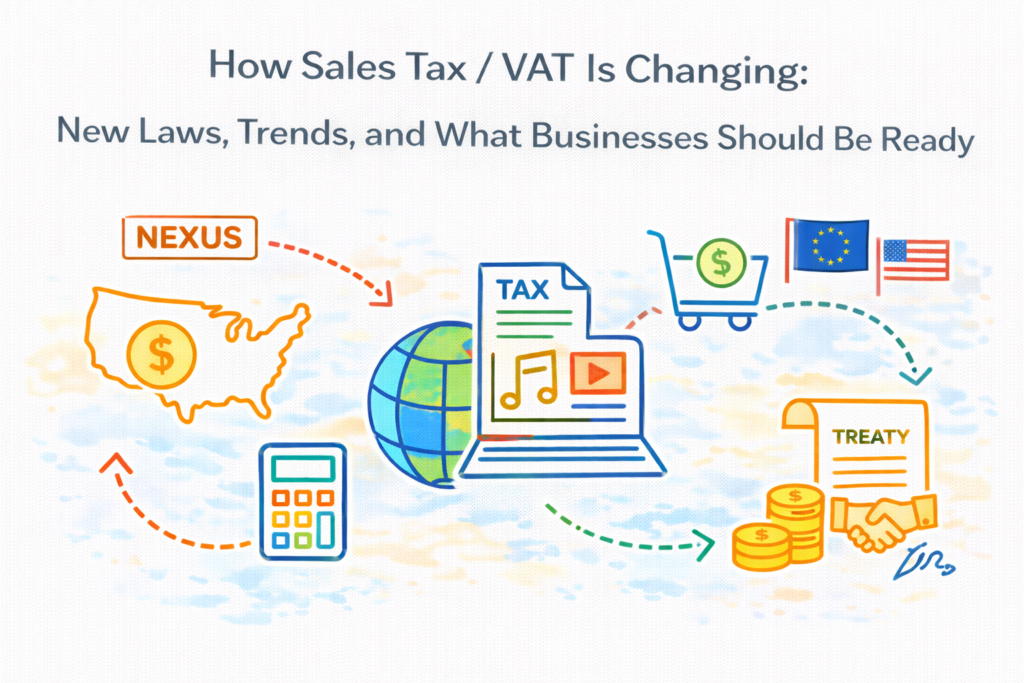
New Treaties and International Coordination
Governments are increasingly coordinating tax policy at the international level.
Global alignment trends
Organizations such as the OECD continue to influence VAT and digital tax standards. While implementation varies by country, the direction is toward greater consistency in how cross border transactions are taxed.
For businesses, this means fewer grey areas but stricter enforcement of clearly defined rules.
Staying informed about international agreements and policy changes is becoming part of core tax strategy.
What Businesses Should Be Ready For
The future of sales tax and VAT compliance will demand more visibility, flexibility, and automation.
Key preparation steps
Review nexus exposure regularly across all jurisdictions
Reevaluate product and service taxability as laws change
Monitor digital service taxation rules in key markets
Ensure accurate customer location data is collected and stored
Invest in systems that can scale with regulatory complexity
Waiting for enforcement action is no longer a viable strategy.
How IST Helps Businesses Stay Ahead
IST helps businesses navigate a rapidly changing tax landscape by providing tools and expertise designed for modern compliance challenges.
By combining regulatory insight with technology driven solutions, IST supports businesses as they adapt to new laws, expand into new markets, and reduce compliance risk.
The goal is not just to react to tax changes, but to anticipate them and build systems that support long term growth.
Sales tax and VAT systems
Sales tax and VAT systems are evolving to reflect a global, digital economy. Economic nexus rules are expanding. Digital services are under greater scrutiny. Cross border ecommerce is reshaping compliance obligations.
Businesses that stay informed and invest in the right technology will be positioned to grow confidently. Those that ignore these trends risk penalties, audits, and operational disruption.
Understanding how sales tax and VAT are changing is not just a compliance task. It is a strategic priority for any business operating in today’s interconnected markets.
Final Thoughts
Sales tax and VAT rules are no longer stable background regulations. They are actively evolving in response to digital commerce, remote selling, and cross border trade. Economic nexus expansion, digital service taxation, and tighter enforcement are becoming the norm, not the exception. Businesses that treat tax compliance as a static obligation will struggle to keep up. Those that stay informed, review exposure regularly, and invest in scalable systems will be better positioned to grow without disruption. Preparing for change is no longer optional. It is part of operating responsibly in a global market.
Tax rules will keep changing whether your systems are ready or not.
IST helps businesses stay ahead of sales tax and VAT changes with technology driven compliance solutions and expert guidance.
Connect with IST to future proof your tax strategy and reduce compliance risk as regulations evolve.
Leave a Reply