
Most businesses that get audited weren’t trying to avoid sales tax. They were trying to manage it with tools that weren’t built for the complexity they were actually dealing with. A spreadsheet that worked at $500K in revenue stops working at $5M. A rate table that was accurate in January becomes a liability by September when three states update their rules. And generic tax software, configured without a complete nexus analysis underneath it, calculates the wrong answer with total confidence, thousands of times a day.How IST Handles International Tax Complexity
This is the problem IST was built to solve. Not just automate compliance, but get it right, starting with the foundation that most software skips entirely.
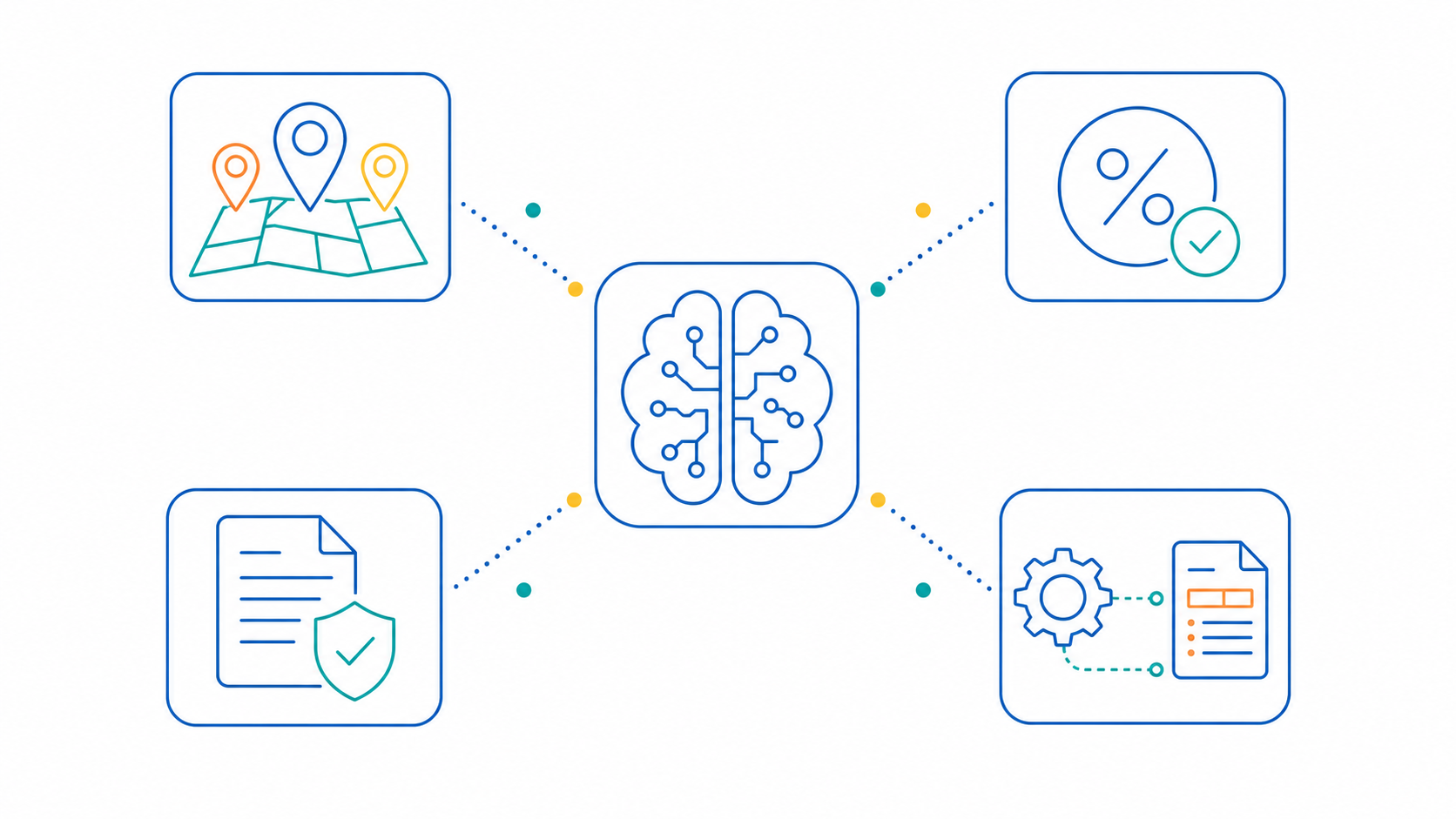
IST’s AI-powered sales tax automation platform gets sales tax right by combining human-expert compliance work with real-time AI calculation. The platform performs continuous nexus monitoring across all U.S. states and international markets, applies product-level taxability classification per jurisdiction, manages exemption certificate validity, and integrates via API with ERPs, billing platforms, and TMS systems. Unlike generic tax software, IST conducts a complete nexus analysis and product taxability review before automation runs, ensuring the AI enforces correct rules rather than automating an incorrect process. IST’s platform covers U.S. sales tax, EU VAT, Canadian GST/HST, Australian GST, and UK VAT.
Why Most Tax Software Gets It Wrong Before It Even Starts
There’s a line that matters more than anything else in sales tax technology: software can automate the wrong process and compound the problem.
Tax software from major platforms like Avalara and TaxJar are powerful calculation engines. But they are not compliance solutions. They apply rules to inputs. If the inputs are wrong, if the nexus determination is incomplete, if the product classification is inaccurate, if exemption certificates aren’t current, the software produces wrong answers at scale. Faster than you could produce them manually, and across every transaction simultaneously.
IST’s approach inverts this sequence. Before any automation runs, IST performs the diagnostic work that tells the software what rules to enforce: nexus analysis, product taxability review, entity structure assessment, exemption certificate status, and registration verification. The AI-powered calculation engine runs after that foundation is established, not instead of it.
What IST’s AI-Powered Platform Actually Does
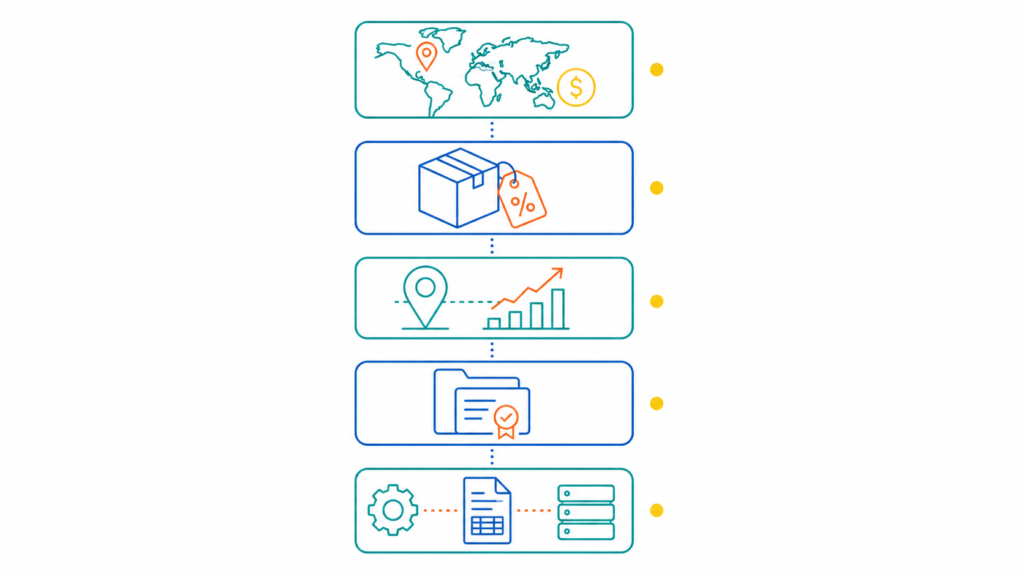
IST’s tax calculation engine handles five core functions in real time, across every transaction and jurisdiction:
1. Rate determination
Sales tax rates change constantly. States update their rates, counties add or remove local taxes, and special jurisdictions adjust their rules on schedules that don’t align with any business’s fiscal calendar. IST’s platform maintains a continuously updated rate database covering all U.S. states and counties, plus international VAT and GST frameworks. When a rate changes, the system updates before the next transaction runs, not after the next filing cycle when the error is discovered.
2.Product taxability classification
The same product can be taxable in one state and exempt in another. Software downloaded electronically is taxable in Texas, largely exempt in California, and treated differently still in Pennsylvania. IST’s AI layer maps product and service classifications to each jurisdiction’s rules, ensuring that taxability determination is applied at the line-item level, not assumed from a single default code applied to everything.
3.Nexus monitoring
Economic nexus thresholds trigger new collection obligations as businesses grow. A SaaS company that starts the year below California’s $500,000 threshold may cross it by Q3. If the system isn’t monitoring that in real time, the business collects nothing in California for the remainder of the year and enters the next audit cycle with unregistered, uncollected liability. IST’s nexus monitoring tracks revenue by jurisdiction continuously and flags threshold crossings before they become past-due obligations.
4.Exemption certificate management
A tax-exempt sale without a current, valid exemption certificate on file is not an exempt sale in the eyes of an auditor, it’s an uncollected tax. IST manages certificate validity by customer, sends renewal requests before expiration, and blocks exempt billing when documentation isn’t current. This function alone resolves one of the most common and costly findings in sales tax audits.
5.API integration with existing systems
IST connects directly to TMS platforms, ERPs, billing systems, and ecommerce platforms via API, so tax determination happens at the point of transaction, not as a manual reconciliation step after the invoice is issued. The result is accurate tax on every invoice, in real time, without manual intervention.
The Difference Between Automation and Accurate Automation
One of IST’s clients, a business managing sales across multiple states, cut its filing preparation time by 85% after implementing IST’s platform. That number comes from eliminating the manual rate lookups, reconciliation errors, and filing corrections that had been consuming hours of staff time every period.
But that efficiency gain only happened because the underlying compliance foundation was correct first. The 85% time reduction is real. So is the audit exposure that doesn’t exist because the rates, classifications, and exemption certificates were right to begin with.
This distinction matters because automation is neutral. It enforces whatever rules it’s given with equal enthusiasm. Fast and wrong is worse than slow and wrong, because it scales. IST’s AI layer doesn’t just calculate faster, it calculates on a foundation of verified compliance inputs that were established by human experts before the software ran its first transaction.
How IST Handles International Tax Complexity
The U.S. sales tax system alone has over 11,000 tax jurisdictions. Add EU VAT, which applies at rates between 17% and 27% across member states, with different reduced rates for different product categories in different countries and the calculation complexity expands by an order of magnitude.
IST’s platform handles international VAT and GST calculation with the same real-time accuracy as U.S. state and local tax. For businesses selling into the EU, Canada, Australia, or the UK, the system applies the correct rate based on the buyer’s location, the product type, and the applicable VAT/GST framework, including the EU’s One-Stop Shop (OSS) requirements for non-EU sellers.
For ecommerce companies and SaaS providers with global customer bases, this means a single integrated tax calculation layer that handles domestic and international obligations without requiring separate workflows for each market.
What “Getting It Right Every Time” Actually Requires
Accuracy at scale in sales tax requires four things working together. Most businesses have one or two.
IST provides all four:
| Layer | What it does | What happens without it |
| Nexus analysis | Identifies every jurisdiction where obligations exist | Software registers in the wrong states or misses states entirely |
| Product taxability review | Maps every SKU/service to jurisdiction-specific rules | Default codes produce systematic misclassification |
| Exemption certificate management | Ensures every exempt sale is documented | Auditors disallow exemptions; uncollected tax becomes seller liability |
| AI-powered calculation engine | Applies correct rate to every transaction in real time | Rate errors compound across every invoice until the next audit |
Remove any one layer and the system produces errors. Remove the first two and the automation accelerates the problem rather than solving it.
What Businesses Should Do to Get This Right
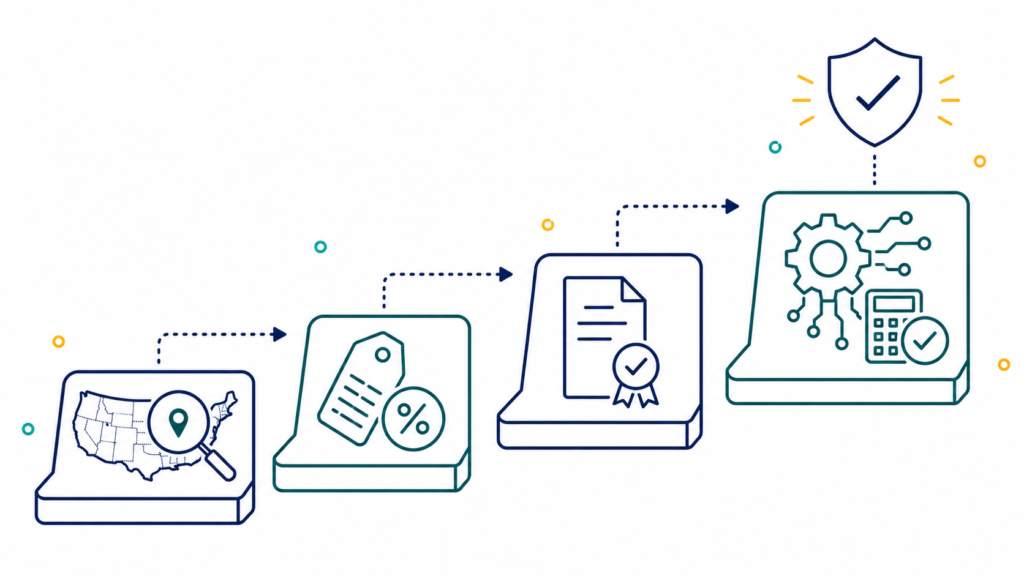
If your current compliance setup doesn’t include all four layers above, the first step is a gap assessment, not a software upgrade.
Specifically:
1. Conduct a nexus analysis covering every state and country where you have customers, employees, or revenue above applicable thresholds
2. Review product taxability classifications for every item or service you sell, in every jurisdiction where you have nexus
3. Audit your exemption certificate file for completeness and currency
4. Evaluate whether your current tax calculation tool is integrated with accurate, current rate data and whether it’s connected to your actual transaction systems
5. Identify any past exposure, periods where you were required to collect and didn’t, and evaluate voluntary disclosure before those periods become the subject of a state-initiated audit
That sequence is the correct order. Starting with step 4 without completing steps 1 through 3 is the mistake most businesses make and the one IST’s approach is specifically designed to prevent.
Final Words
AI-powered sales tax calculation is not magic. It’s the application of rules, at scale, in real time. The quality of those results depends entirely on the quality of the rules being applied and rules are only correct if the underlying compliance work was done correctly first.
IST’s platform gets sales tax right every time because the AI runs on a foundation that was built right. The nexus analysis happened. The product classifications were verified. The exemption certificates are current. The rate database is live. And when any of those inputs change, because the business grows, acquires, or enters a new market, the system updates before the next transaction, not after the next audit.
That’s what accurate automation looks like. And it’s the only kind worth having.
See What Accurate Sales Tax Automation Actually Looks Like
IST works with businesses that are ready to move from compliance that’s approximately right to compliance that’s verified correct, across every jurisdiction, every product type, and every transaction.
The starting point is not a software demo. It’s a conversation about where your business has obligations, whether your current setup is enforcing the right rules, and what needs to be corrected before automation runs.
Find out whether your current sales tax automation is solving the problem or scaling it.
What is AI-powered sales tax automation and how does it work?
AI-powered sales tax automation uses machine learning and continuously updated tax data to determine the correct sales tax rate, product taxability status, and exemption eligibility for every transaction in real time. The system integrates with billing platforms, ERPs, or ecommerce systems via API and applies jurisdiction-specific rules at the point of invoice without manual intervention.
How is IST different from Avalara or TaxJar?
Avalara and TaxJar are calculation engines, they apply rules to inputs. IST provides both the compliance foundation and the calculation engine. Before automation runs, IST conducts nexus analysis, product taxability review, and exemption certificate management to ensure the software is enforcing correct rules. Without that foundation, any tax software can automate an incorrect process at scale.
How does IST’s platform handle rate changes across multiple states?
IST maintains a continuously updated rate database covering all U.S. state and local jurisdictions. When a state or county updates its sales tax rate, the system reflects the change before the next transaction runs, not after the next manual reconciliation or filing cycle. This eliminates the rate error window that exists in systems relying on periodic manual updates.
What is nexus monitoring and why does it matter for growing businesses?
Nexus monitoring tracks a business’s revenue and transaction volume by jurisdiction in real time, comparing it against each state’s economic nexus threshold, typically $100,000 in annual sales or 200 transactions. When a threshold is approaching or has been crossed, the system flags the new registration obligation before the business begins accumulating uncollected tax in that state. Growing businesses commonly cross multiple thresholds in a single fiscal year.
How does IST handle sales tax for international markets?
IST’s platform applies EU VAT, Canadian GST/HST, Australian GST, and UK VAT rules using the same real-time calculation framework as U.S. sales tax. For EU sales, the platform supports One-Stop Shop (OSS) registration requirements and applies the correct member state rate based on the buyer’s location and product type. This allows businesses with global customer bases to manage domestic and international tax obligations through a single integrated system.
What happens if a business has been using tax software configured incorrectly?
If the underlying nexus analysis or product classifications were incorrect when the software was configured, the software has been producing wrong tax amounts on every transaction since implementation. The business may owe back tax in states where it was under-collecting, or it may have been over-collecting from customers in states where the product is exempt. IST’s diagnostic process identifies these gaps and, where back liability exists, evaluates voluntary disclosure as a path to limiting penalty exposure.
How long does it take to implement IST’s tax automation platform?
Implementation timeline depends on the complexity of the business, number of jurisdictions, product lines, existing ERP or billing system, and current compliance state. Businesses that have already completed nexus analysis and product classification can integrate faster. IST’s typical process starts with the compliance assessment, then moves to product and exemption setup, then API integration with existing systems.
Can IST’s platform replace a tax team entirely?
For most businesses, IST’s platform replaces the manual calculation and rate-lookup work that consumes significant staff time, IST clients have reported up to 85% reduction in filing preparation time. The platform does not replace the need for judgment in complex areas like audit defense, voluntary disclosure negotiations, or unusual product classification questions. IST provides both the platform and the expert advisory support for those situations.
Leave a Reply