
What Counts, How They Differ, and How to Document Them Correctly
Tax exemptions and zero rated supplies are two of the most misunderstood areas in indirect taxation. Many businesses assume both simply mean no tax charged, but that assumption is exactly how audits, penalties, and back taxes happen. While both concepts reduce the tax burden on a transaction, they work very differently across tax systems and require very different documentation.
This guide explains what qualifies as tax exempt or zero rated, how the rules vary across regions, and how to document these transactions properly to stay compliant and audit ready.
What Is a Tax Exempt Supply
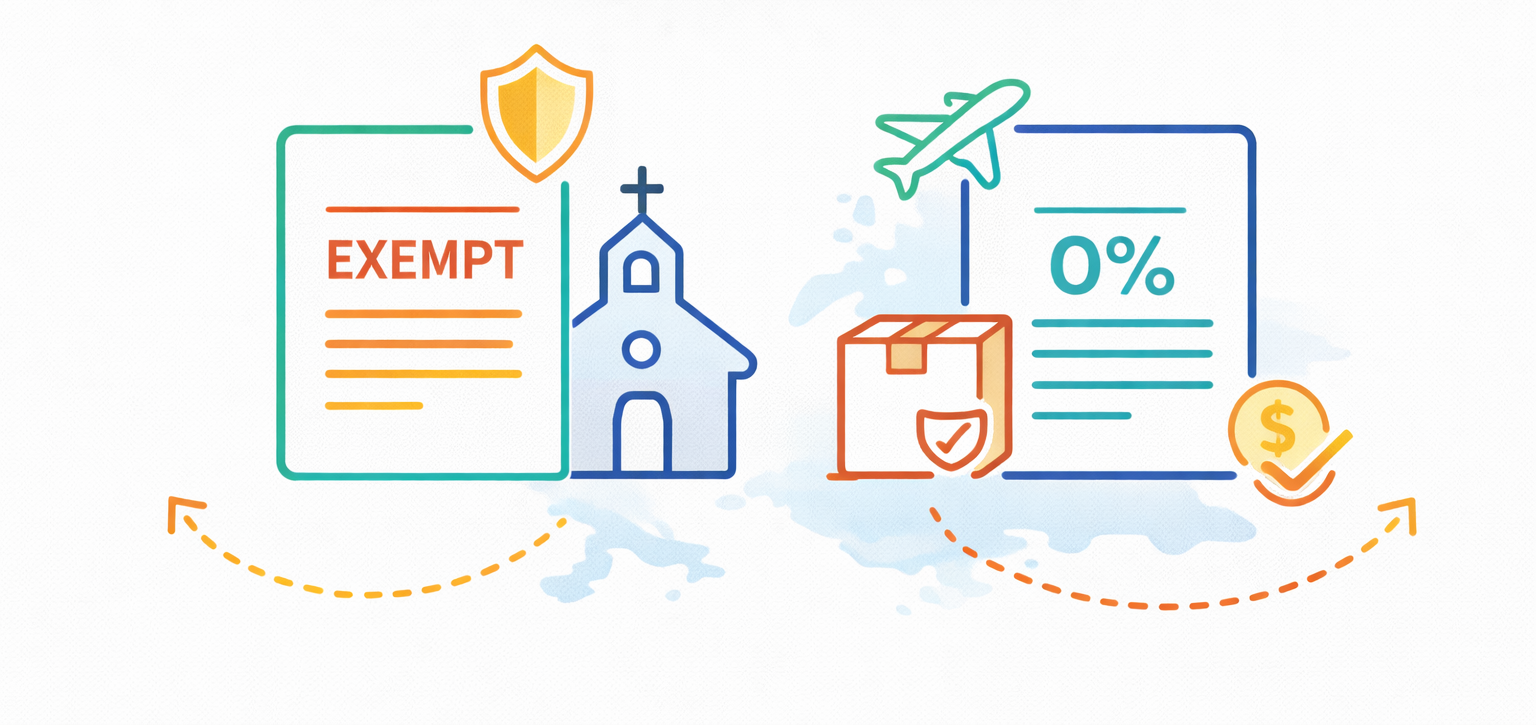
A tax exempt supply is a transaction that is not subject to sales tax or VAT under specific legal provisions. When a supply is exempt, no tax is charged to the customer, and in most tax systems, the seller cannot recover input tax related to that transaction.
Common examples of tax exempt supplies include healthcare services, educational services, certain financial services, and nonprofit or charitable transactions. In the United States, exemptions often depend on the buyer rather than the product. Government agencies, resellers, and nonprofits may qualify if valid exemption certificates are provided.
In VAT systems such as those used in Europe, exemptions are typically defined by the nature of the supply itself rather than the customer. Financial services and insurance are classic VAT exempt categories.
The key issue with exemptions is that they remove both output tax and input tax recovery. This can quietly increase costs for businesses if not planned correctly.
What Does Zero Rated Mean
Zero rated supplies are taxable supplies, but the tax rate applied is zero percent. That distinction matters a lot.
When a supply is zero rated, the seller does not charge tax to the customer, but still retains the right to recover input tax on related expenses. This is why zero rating is often more favorable than exemption.
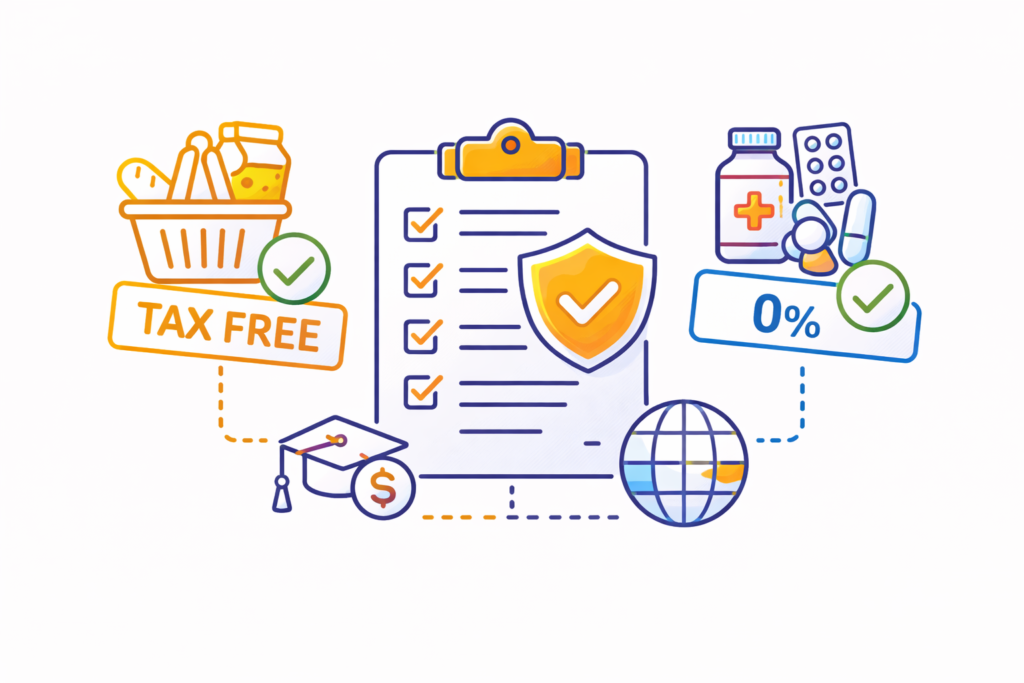
Zero rating is commonly applied to exports of goods and services, international transportation, and in some countries, essential goods such as food or medicine.
In VAT and GST systems, zero rating is tightly regulated. For example, exports from the European Union are generally zero rated, but only if strict proof of export requirements are met. In countries like Canada, Australia, and New Zealand, zero rating also applies to specific cross border services.
In the United States, sales tax systems rarely use the term zero rated. Instead, similar outcomes are achieved through exemptions or resale certificates, but the legal mechanics are different.
Key Differences Between Exempt and Zero Rated Supplies
Although both result in no tax charged to the customer, the business impact is very different.
With exempt supplies, input tax is usually not recoverable. This can increase operational costs and affect pricing strategies.
With zero rated supplies, input tax recovery is allowed, which helps maintain tax neutrality and cash flow.
Another major difference is audit risk. Zero rated supplies often attract more scrutiny because tax authorities want proof that the transaction truly qualifies. Exempt supplies are also audited, but usually with a stronger focus on eligibility rather than transactional evidence.
Understanding which category applies in each jurisdiction is essential for businesses operating across borders.
Documentation Requirements You Cannot Ignore
Documentation is where most businesses fail, even when the underlying tax treatment is correct.
For tax exempt sales, especially in sales tax jurisdictions, sellers must collect and validate exemption certificates from customers. These certificates must be complete, accurate, and stored properly. Missing or expired certificates often result in tax assessments during audits, even years later.
For zero rated supplies, documentation requirements are usually stricter. Typical requirements include proof of export, shipping documents, customs declarations, contracts showing the location of the customer, and evidence of payment from foreign accounts.
In VAT systems, incorrect or missing documentation can lead to reclassification of zero rated supplies as standard rated, triggering back taxes, interest, and penalties.
Digital storage, document traceability, and clear internal procedures are critical to managing this risk.
Audit Risk and Common Mistakes
Tax authorities worldwide focus heavily on exemptions and zero rated transactions because they represent areas where tax revenue is most easily lost.
Common mistakes include assuming all exports are zero rated without verifying local rules, accepting invalid exemption certificates, failing to track expiration dates, and misclassifying mixed supplies that include both taxable and exempt elements.
Another frequent issue is inconsistent treatment across jurisdictions. What qualifies as zero rated in one country may be exempt or fully taxable in another.
Businesses that rely on manual processes or outdated tax logic are especially vulnerable during audits.
Best Practices for Staying Compliant
To manage exemptions and zero rated supplies effectively, businesses should maintain clear tax determination rules by country, regularly review exemption documentation, and implement automated validation where possible.
Training sales, finance, and operations teams is equally important. Many compliance failures start with incorrect assumptions made at the point of sale or contract negotiation.
Using centralized tax technology and maintaining audit ready documentation can significantly reduce risk and improve confidence when expanding into new markets.
Final Thoughts
Tax exemptions and zero rated supplies are not loopholes or shortcuts. They are legal tax treatments with strict conditions attached. Understanding the difference, applying the correct rules, and documenting everything properly is the difference between compliant growth and expensive audits.
For businesses operating across borders, getting this right is not optional. It is foundational to sustainable and compliant global operations.
Leave a Reply