
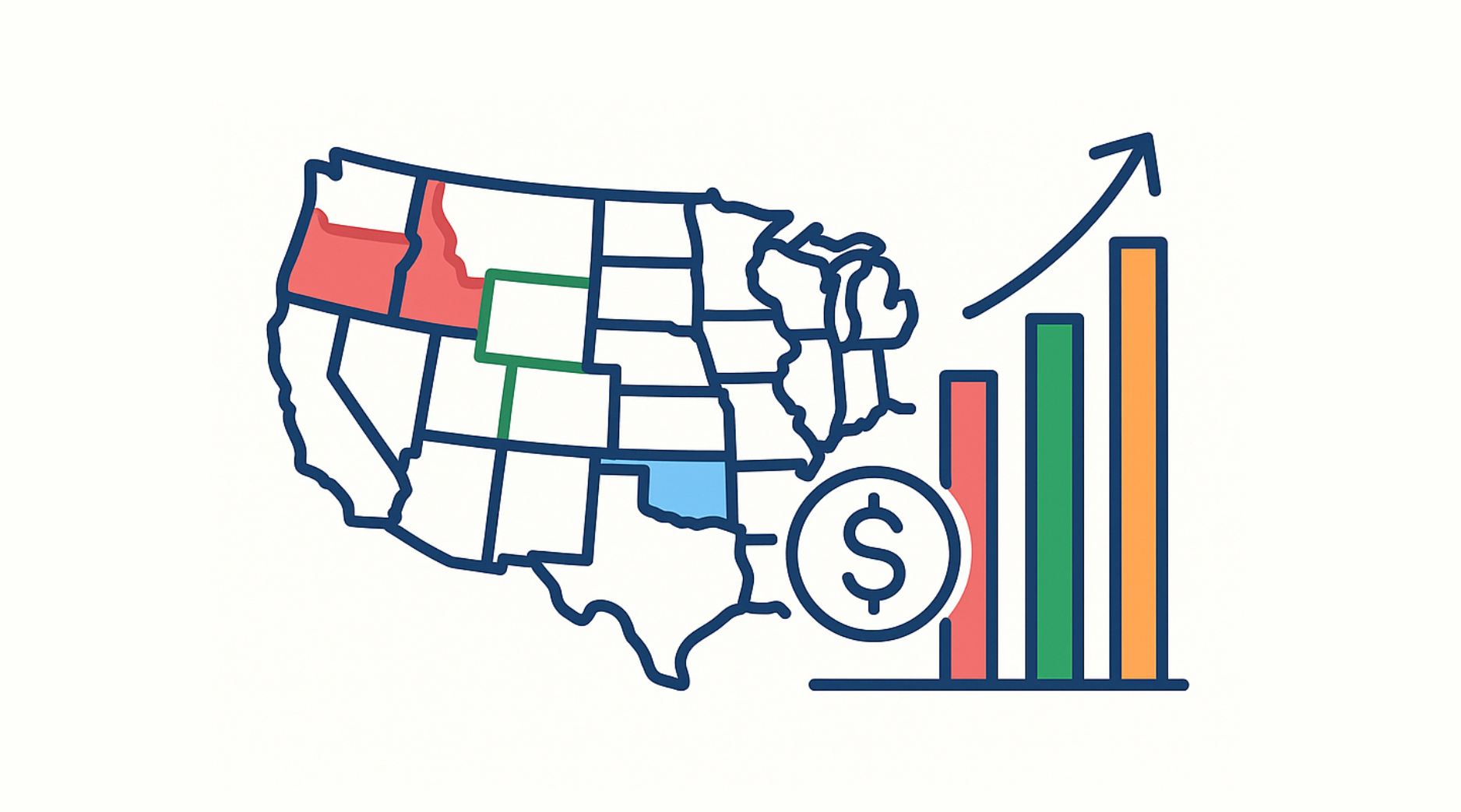
Ever wondered why a coffee costs $3.25 in one state and $3.12 in another? That few cents difference often comes down to sales tax. For businesses selling across multiple states or even globally, these small differences add up to major compliance challenges. Understanding why sales tax differs across regions is the key to staying compliant and protecting your bottom line.
Understanding Why Sales Tax Differs Across Regions
Sales tax isn’t a single, unified rate, it’s a patchwork of rules defined by state, county, and city governments. While the U.S. federal government doesn’t collect sales tax, individual jurisdictions set their own policies. Consequently, over 11,000 unique sales tax jurisdictions exist nationwide.
For example, a sale in Dallas, Texas may include both state and local tax, while a similar sale in Portland, Oregon may be entirely tax-free. In the European Union or Canada, similar regional differences apply through VAT or GST systems.
This decentralized model gives local governments flexibility but for businesses, it creates confusion.
Key Factors That Influence Why Sales Tax Differs Across Regions
1. Jurisdiction Authority
Each U.S. state determines its own rate and taxability rules. Cities and counties can add additional layers on top. Therefore, even within one state, two nearby zip codes can have different tax rates.
2. Product and Service Categories
Some products like groceries, medicine, or educational materials, are exempt or taxed at reduced rates in certain regions. For example, clothing under $110 is tax-exempt in New York but not in California.
3. Local Policy Goals
Sales tax policies often reflect local priorities. A city may lower tax rates to attract business investment or raise them to fund infrastructure projects.
4. Ecommerce and Remote Sales
After the South Dakota v. Wayfair ruling, states gained the power to tax online sales from out-of-state sellers once they meet certain thresholds. As a result, remote sellers must register and collect tax in more states than ever before.
Transition words like therefore and as a result emphasize the growing need for automation and awareness across tax zones.
Why Understanding Regional Sales Tax Differences Matters for Businesses
For small and mid-sized businesses, misunderstanding regional rules can lead to:
- Overcharging customers and losing competitiveness
- Under-collecting taxes and facing audits or penalties
- Inefficient manual tracking and reporting processes
Moreover, with frequent rate updates, some states change them quarterly, staying compliant manually is almost impossible.
That’s where automation solutions like Integral Sales Tax (IST) come in.
How IST Simplifies Regional Sales Tax Management
IST continuously monitors tax rate changes across all U.S. jurisdictions and applies the correct rate in real time, whether you’re selling in New York, Nevada, or Nebraska.
With automated tax classification, filing, and reporting, businesses no longer need to manually track which city, county, or district applies to each sale.
IST also integrates seamlessly with ecommerce and accounting platforms, ensuring that every transaction, no matter the location, meets local compliance standards.
Before IST: Businesses spent 15–20 hours monthly updating tax tables and reconciling errors.
After IST: Those same tasks now take minutes, saving teams time, money, and stress.
Scaling Beyond Borders
If your business sells internationally, the complexity grows further. VAT, GST, and import taxes differ across Europe, Canada, and Australia. IST’s platform supports cross-border compliance, helping you adapt as your business expands into new markets.
As a result, you stay compliant everywhere, without manual intervention.
Final Words
Regional tax variation isn’t just an accounting detail, it’s a critical business factor. Understanding why sales tax differs across regions helps you plan better, price smarter, and avoid compliance headaches.
With Integral Sales Tax, you can automate every step, rate updates, filing, and compliance, so your business stays ahead, no matter where you operate.
Stay compliant and save time, automate your tax compliance with IST today.
Leave a Reply